Executive Summary: Key Technical Insights
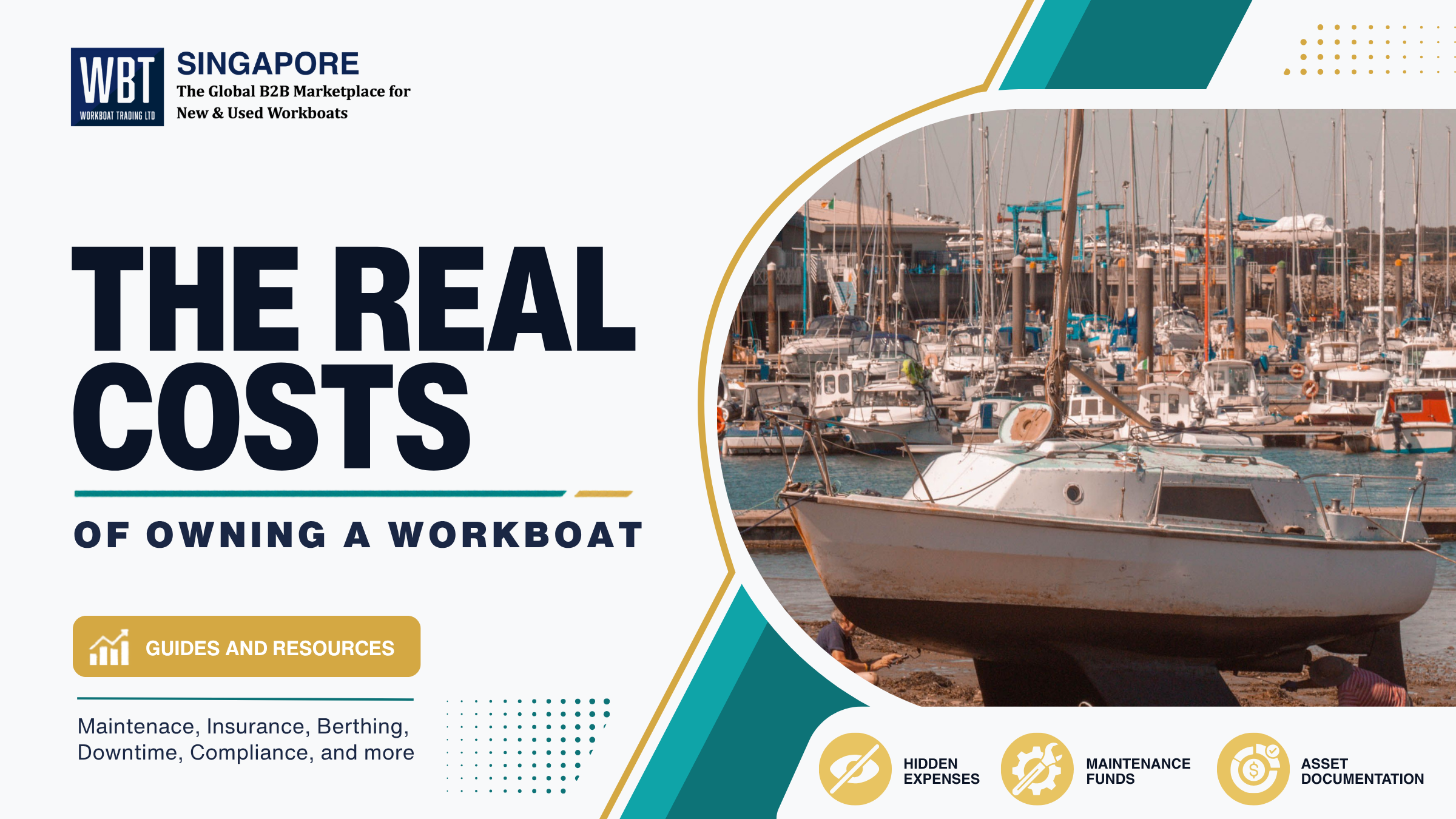
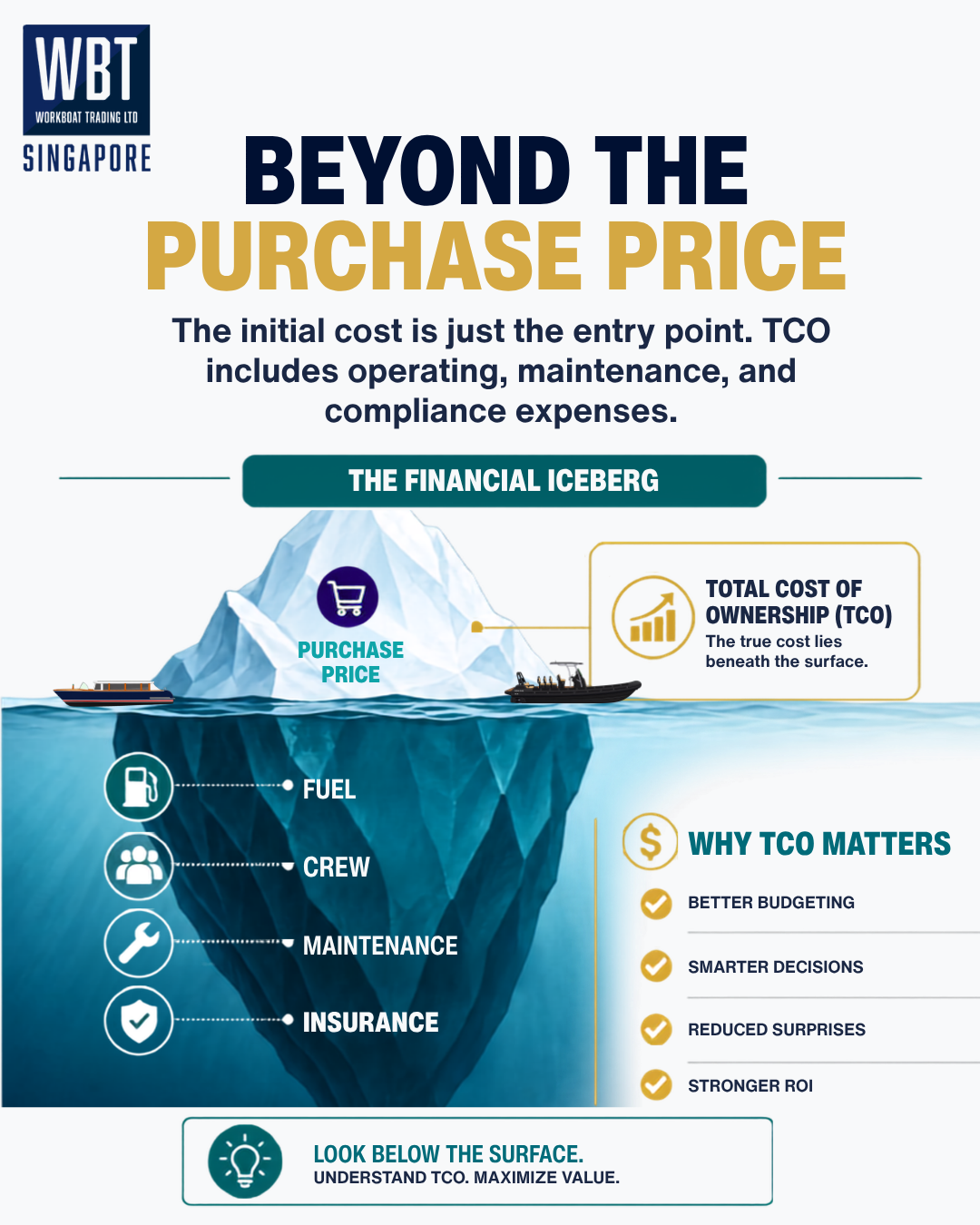
- Total Cost of Ownership (TCO): The initial purchase price represents only a fraction of a workboat's lifecycle cost; operating, maintenance, and compliance expenses dictate the true financial viability of the asset.
- Hidden Acquisition Liabilities: A lower acquisition price is often offset by immediate capital expenditures required to resolve deferred maintenance, satisfy class surveys, or update safety certifications.
- Operating Expense (OPEX) Drivers: Fuel, lubrication, crew administration, and docking fees represent the core variables in annual operating budgets, directly impacted by usage intensity and duty cycles.
- Strategic Maintenance Funding: Allocating budget to structured preventive maintenance mitigates the high indirect costs of unscheduled downtime, protecting charter revenue and crew productivity.
- Asset Documentation and Resale Value: Complete, auditable maintenance records and classification documents preserve residual value, reduce depreciation, and accelerate sales transactions in the B2B vessel marketplace.
Purchase Price is Only the Entry Point
When acquiring a commercial workboat, buyers often focus on the negotiated sale price. While this initial transaction is the most visible capital outlay, it is merely the entry point of a multi-year financial commitment. Once the bill of sale is signed, the owner assumes responsibility for a complex web of recurring costs: operating expenses, preventive maintenance, marine insurance, harbor berthing, statutory compliance, and eventual disposal or resale planning.
Because of this lifecycle reality, a discounted purchase price can be a financial trap. A vessel listed below market value often carries significant liabilities, such as deferred engine servicing, worn hull plates, outdated electrical systems, or expired safety gear. Resolving these issues is necessary to make the vessel operational and compliant, which can quickly exceed the savings of the initial discount.
When evaluating assets, buyers should perform a thorough comparison. They must analyze not only the purchase price but also the vessel's technical history, structural integrity, and operating category. Comparing options across the Singapore vessel listings and verifying listing details on the WBT B2B marketplace helps ensure that buyers select an asset suited for their operational needs. Understanding hull material choices (steel vs. aluminum vs. GRP) is also critical, as the hull type directly dictates future maintenance costs and repair requirements.
Operating Costs Shape the Real Budget
Operating expenses (OPEX) represent the day-to-day costs of keeping a workboat in service. These expenses are highly variable and are directly influenced by how intensively the vessel is used. A vessel operating on double shifts in busy port waters will accumulate running costs much faster than one used for occasional utility support.
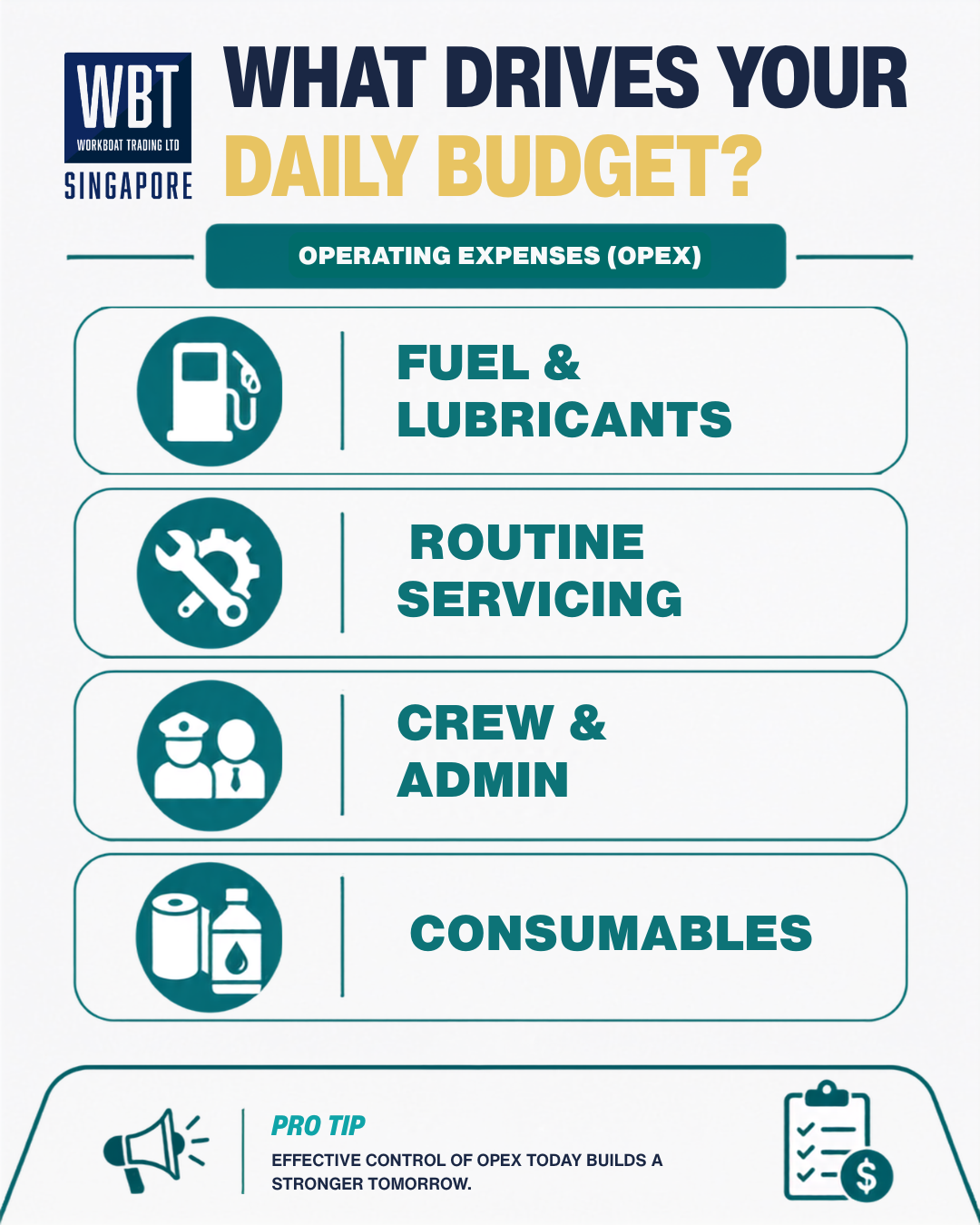
The primary components of a workboat's operating budget include:
- Fuel and Lubricants: Fuel is typically the single largest variable cost. Propulsion choice, hull cleanliness, and speed profiles directly impact fuel consumption.
- Routine Servicing: Regularly scheduled fluid changes, filter replacements, and belt adjustments are required to keep the main engines and generators running reliably.
- Crew and Administration: Qualified crew salaries, safety training, and administrative compliance costs must be budgeted for.
- Consumables and Deck Spares: Ropes, fenders, seals, and hand tools need continuous replacement in harsh marine environments.
The vessel's operational profile and engine configuration dictate its fuel efficiency and wear rate. Choosing the right inboard vs outboard motor choice is a major factor in fuel efficiency and maintenance costs, especially in tropical waters. Understanding how these factors apply to different vessel categories (such as tugs, crew transfer vessels, and utility launches) is essential for building an accurate operational budget.
Maintenance is a Financial Issue, Not Just a Technical One
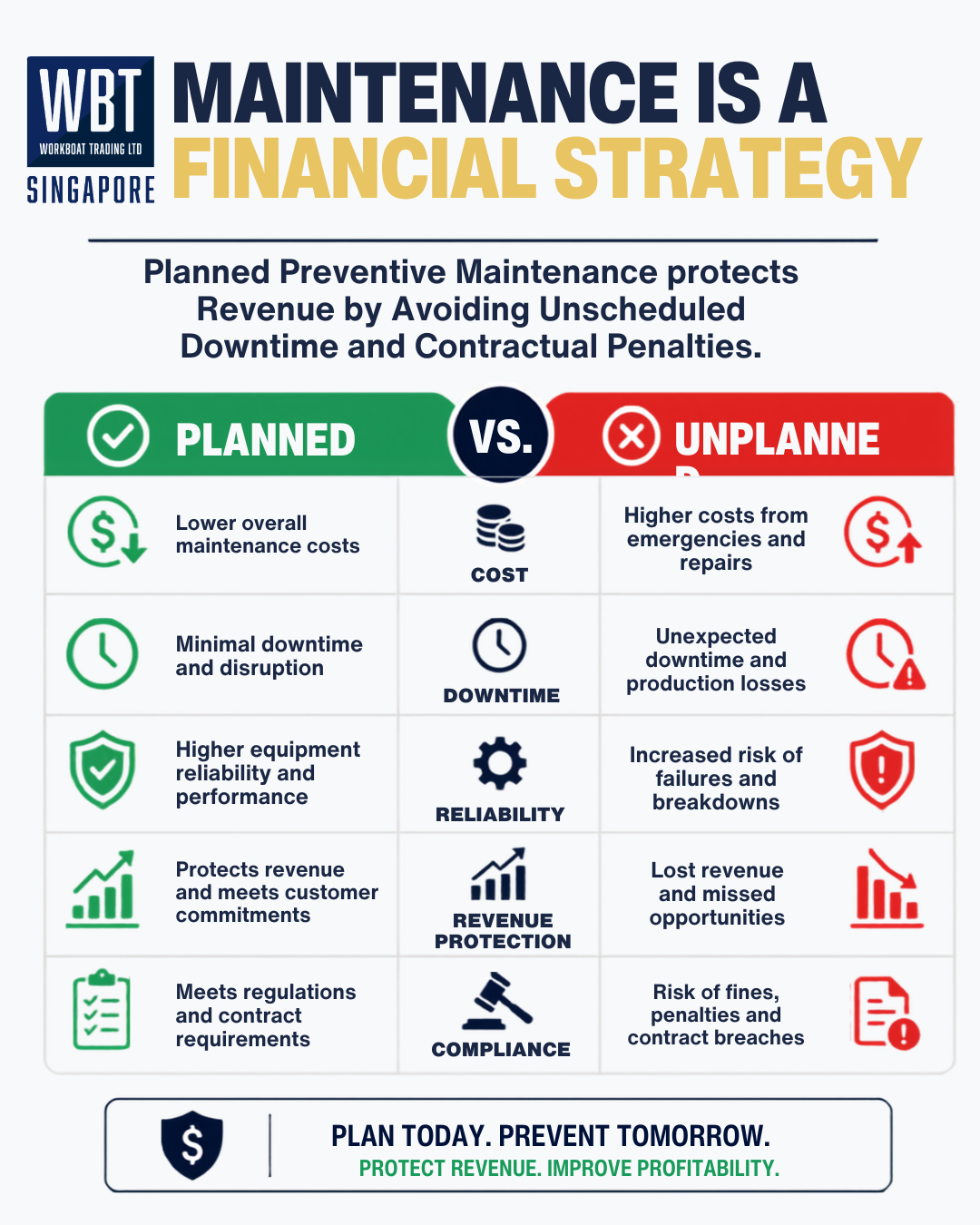
Maintenance is often treated as a technical detail managed by the engineering crew. In reality, it is a core financial driver. Maintenance costs are split into two categories: planned (preventive) and unplanned (corrective).
Planned maintenance is predictable and includes scheduled engine servicing, oil analyses, anode replacements, and hull coating renewals. Unplanned maintenance is unpredictable and results from mechanical failures, electrical ground faults, cooling blockages, or structural damage.
The financial cost of unplanned maintenance goes beyond parts and labor. The largest expense is often the indirect cost of downtime. When a vessel goes offline unexpectedly, the owner faces:
- Lost Charter Revenue: The inability to fulfill charter agreements results in immediate revenue loss.
- Contractual Penalties: Delaying a project in a busy commercial port can trigger severe financial penalties.
- Crew Costs: The crew must still be paid even when the vessel is inactive.
- Reputational Damage: Clients may choose more reliable operators for future projects.
Implementing a structured workboat maintenance planning guide mitigates these risks. Investing in preventive maintenance reduces the frequency of emergency repairs and helps ensure the vessel remains productive and profitable.
Insurance, Berthing, and Compliance Add Up Quickly
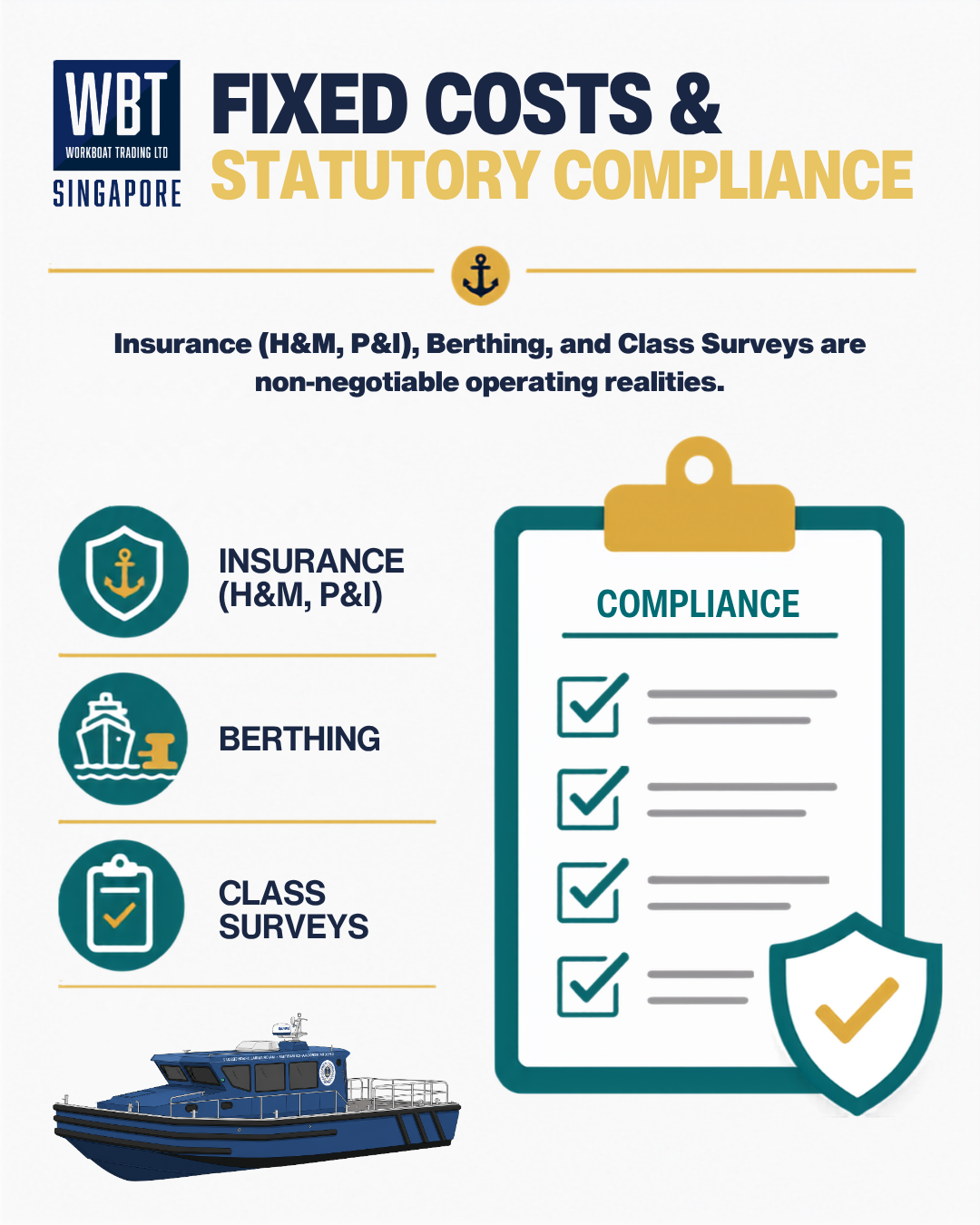
Fixed overhead costs must be factored into the ownership model. These expenses are incurred regardless of whether the vessel is actively working or sitting idle.
1. Marine Insurance
Commercial workboats require comprehensive insurance coverage, typically split into Hull & Machinery (H&M) and Protection & Indemnity (P&I). H&M covers physical damage to the vessel, while P&I covers third-party liabilities, including environmental damage, pollution cleanup, and crew injury. Premium rates depend on the vessel's value, operational profile, operating area, and maintenance history.
2. Berthing and Mooring
Berthing fees vary significantly by location and vessel size. In busy maritime hubs like Singapore, berthing space is limited and commands a premium. Mooring fees, wharfage charges, and terminal access fees must be built into the annual budget.
3. Statutory and Class Compliance
To operate legally in commercial waters, vessels must maintain compliance with national authorities like the Maritime and Port Authority of Singapore (MPA) and classification societies. This requires annual inspections, statutory surveys, and safety equipment certifications. Fleet managers must budget for the five-year classification surveys cycle, which involves dry-docking, hull thickness measurements, and shaft inspections. These requirements are discussed in detail in the APAC Workboat Market Outlook 2026, highlighting the importance of regulatory compliance in long-term cost models.
Documentation Protects Asset Value
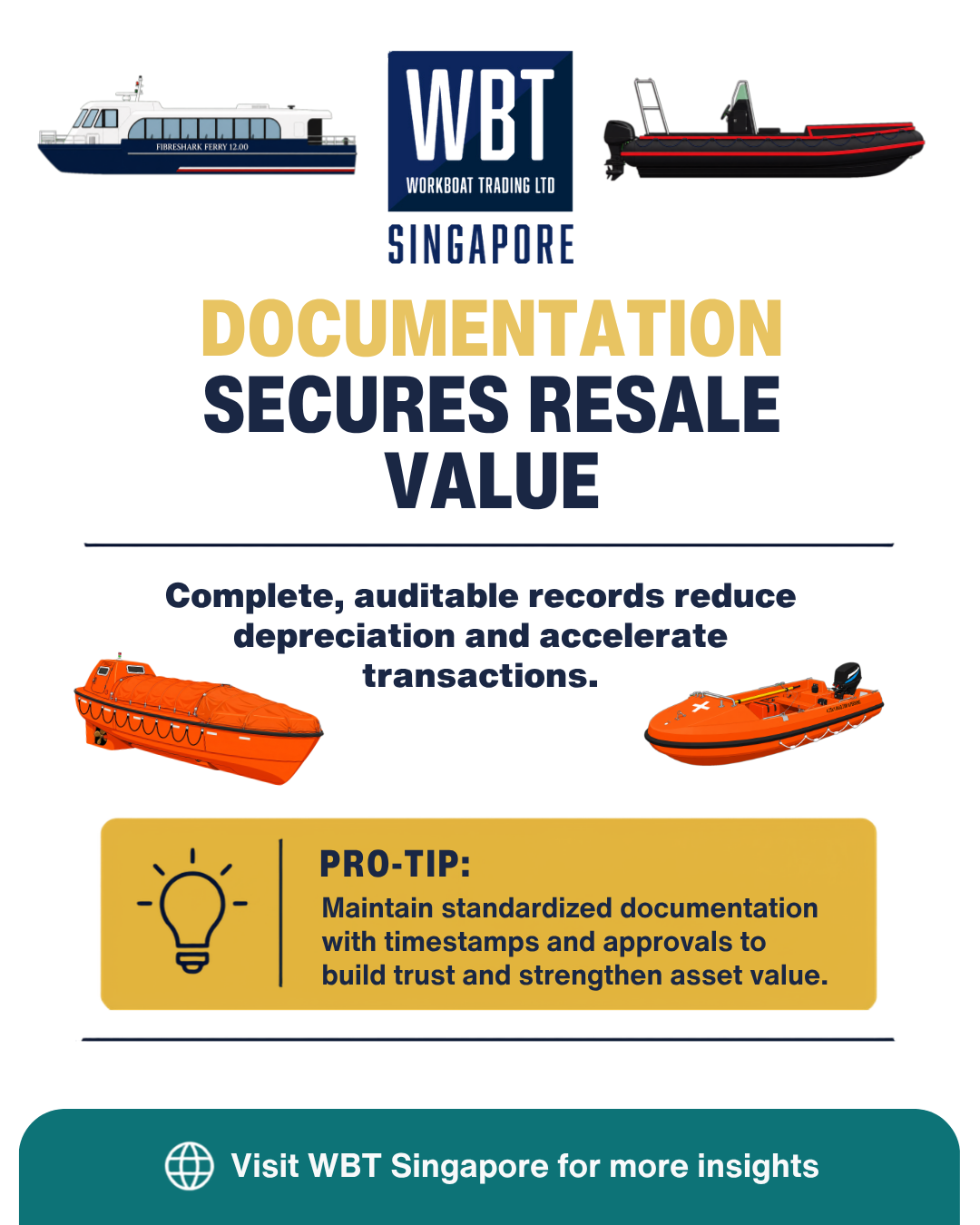
Proper documentation is a key financial asset. It helps operators manage maintenance schedules and protects the vessel's value during transactions.
When selling a vessel, providing complete, verified records is critical to achieving a strong valuation. Buyers, surveyors, and insurers look for:
- Detailed engine logs showing service history and fluid analyses.
- Classification society survey reports and certificates.
- Records of major repairs, structural steel renewals, and machinery overhauls.
- Inventories of onboard spare parts and equipment manuals.
A well-documented vessel reduces buyer uncertainty and facilitates transactions. Sellers can use the WBT Singapore platform to present technical specifications and documentation directly to qualified buyers. Our FAQ and seller guides provide details on how to structure listing specifications to attract serious inquiries. Using a standard vessel listing specifications form ensures that all key technical details are presented clearly, building buyer confidence and protecting asset value.
Depreciation and Resale Should Be Planned Early
Depreciation is the decline in an asset's value over time. For workboats, depreciation is not a simple, linear calculation. It is affected by age, operating hours, structural condition, maintenance history, and market demand.
A vessel that is poorly maintained will experience rapid depreciation, as buyers deduct the cost of deferred repairs from the purchase price. Conversely, a vessel with a documented history of preventive maintenance and clean class records will hold its value much better.
Market conditions also play a role in depreciation. As environmental regulations tighten—such as the MPA 2030 decarbonisation mandate—older, less efficient vessels may experience accelerated depreciation. Operators must plan their exit strategies early, ensuring that maintenance and compliance schedules are aligned to maximize resale value. Reviewing the APAC Workboat Market Outlook 2026 helps owners align their exit timelines with market trends.
Building a Total Cost of Ownership (TCO) Model
Before acquiring a workboat, operators should build a comprehensive Total Cost of Ownership (TCO) model. This model separates fixed costs from variable costs to project the true annual cost of operation:
| Cost Category | Expense Type | Description | | :--- | :--- | :--- | | Fixed Costs | Acquisition Financing | Principal and interest payments (if financed) | | | Marine Insurance | Hull & Machinery (H&M) and Protection & Indemnity (P&I) | | | Berthing & Mooring | Monthly marina or terminal docking fees | | | Annual Inspections | Statutory compliance surveys and class fees | | | Base Crew Salaries | Minimum crew complement required for standby | | Variable Costs | Fuel & Lubricants | Directly tied to operating hours and engine load | | | Planned Maintenance | Consumables, filters, oil changes, and regular servicing | | | Corrective Repairs | Unscheduled repairs and replacement parts | | | Shipyard Dry-docking | Five-year major class survey and hull recoating reserve |
By tracking these costs, operators can calculate the vessel's daily running cost and determine the charter rate required to achieve profitability.
FAQ
What are the major hidden costs in pre-owned workboat purchases?
The most common hidden costs are deferred maintenance liabilities (such as worn engines or deteriorating cooling systems), pending dry-docking requirements for five-year class renewals, and outdated safety gear that must be replaced to meet current MPA compliance standards.
How does fuel consumption vary between workboat categories in Singapore port waters?
Fuel consumption depends on the vessel's displacement, hull design, and engine power. A high-bollard-pull harbor tugboat or a fast crew transfer vessel (CTV) consumes significantly more fuel per hour than a small harbor launch or utility tender. Choosing the right inboard vs outboard motor choice is a major factor in overall efficiency.
How often should operators budget for dry-docking and what is the typical cost?
Classed commercial vessels must dry-dock twice every five years, with the maximum interval between dockings not exceeding 36 months. For small to medium workboats in Singapore, a routine dry-docking can cost between SGD 30,000 and SGD 100,000, depending on the required steel renewal and paint work.
What is the difference between Hull & Machinery (H&M) and Protection & Indemnity (P&I) insurance?
Hull & Machinery (H&M) insurance covers physical damage to the vessel's hull, machinery, and onboard equipment. Protection & Indemnity (P&I) insurance is a mutual insurance association that covers liability risks, including third-party damage, pollution, crew injury, and wreck removal.
How does the MPA 2030 decarbonisation mandate affect workboat depreciation and future value?
Vessels that cannot be retrofitted to comply with the green mandate or those with high emissions profiles will experience accelerated depreciation and lower resale values. Conversely, compliant electric or hybrid vessels will command a premium. Refer to our MPA 2030 guide for details.
How does detailed maintenance recordkeeping impact resale speed and valuation on WBT Singapore?
Providing a complete, verified service history increases buyer confidence and helps speed up transactions. It reduces negotiation times and demonstrates that the vessel has been managed to professional standards, directly protecting its resale valuation. Learn more about how the platform works to optimize your selling strategy.