Executive Summary: Key Technical Insights
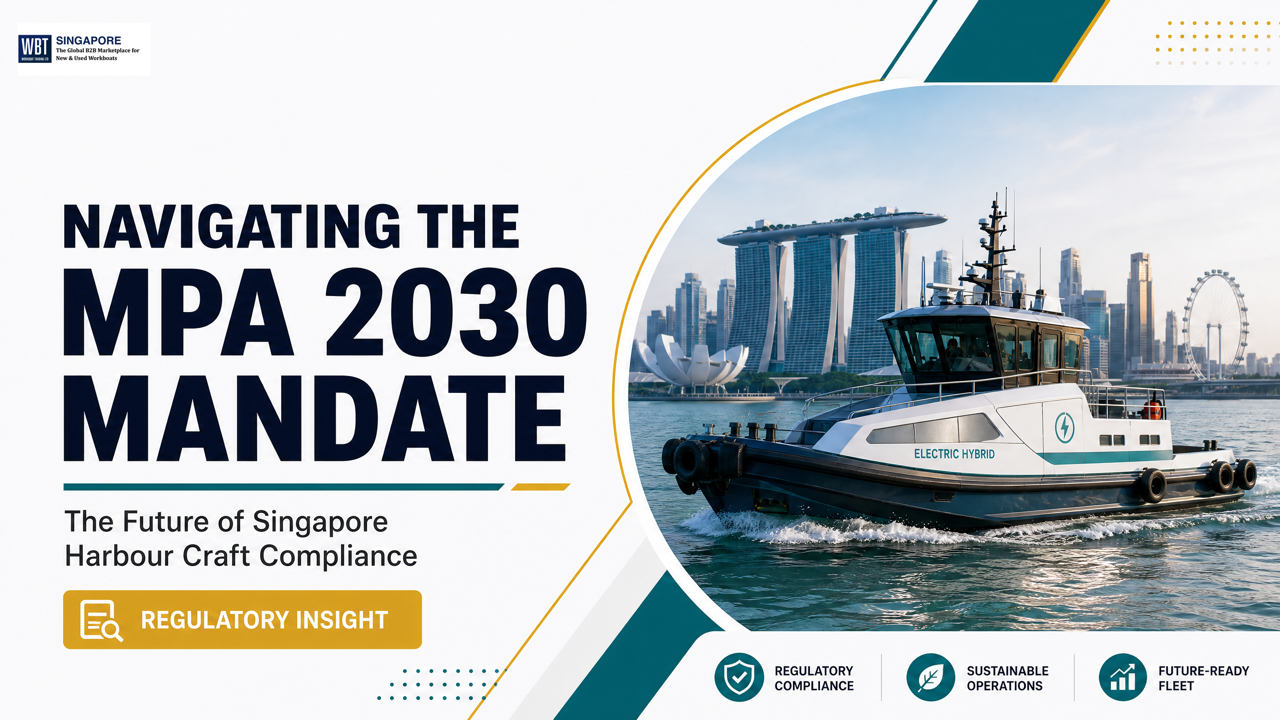
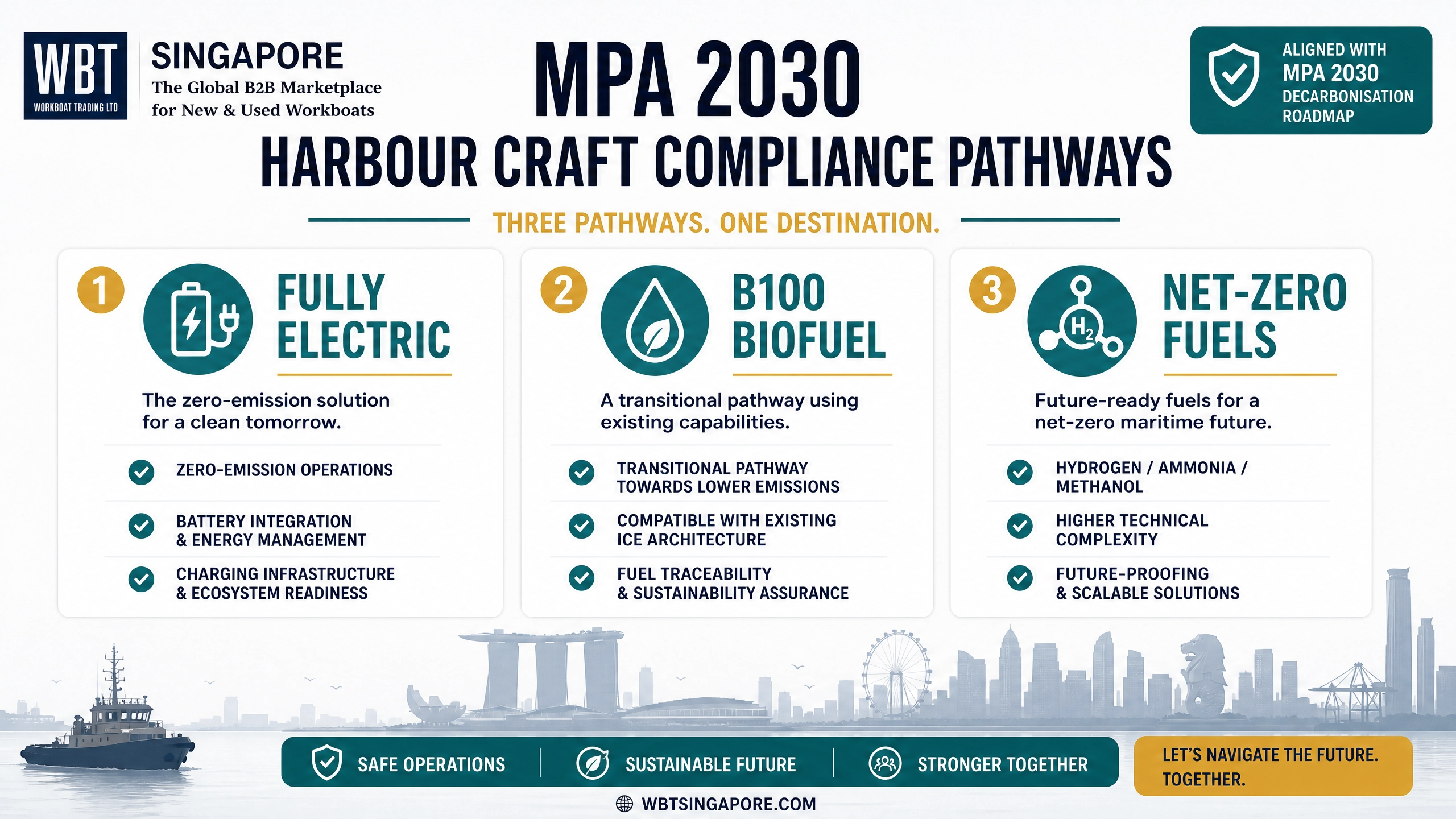
- The Singapore MPA harbour craft regulations 2030 require new harbour craft operating in Singapore port waters from 2030 to be fully electric, capable of using B100 biofuel, or compatible with net-zero fuels such as hydrogen.
- Fully electric harbour craft provide the strongest long-term compliance position, but require battery integration, charging access, thermal control, and careful naval architecture around weight distribution.
- B100 biofuel-capable vessels offer a transitional compliance route because they can retain internal combustion architecture, but fuel traceability and lifecycle emissions will become increasingly important.
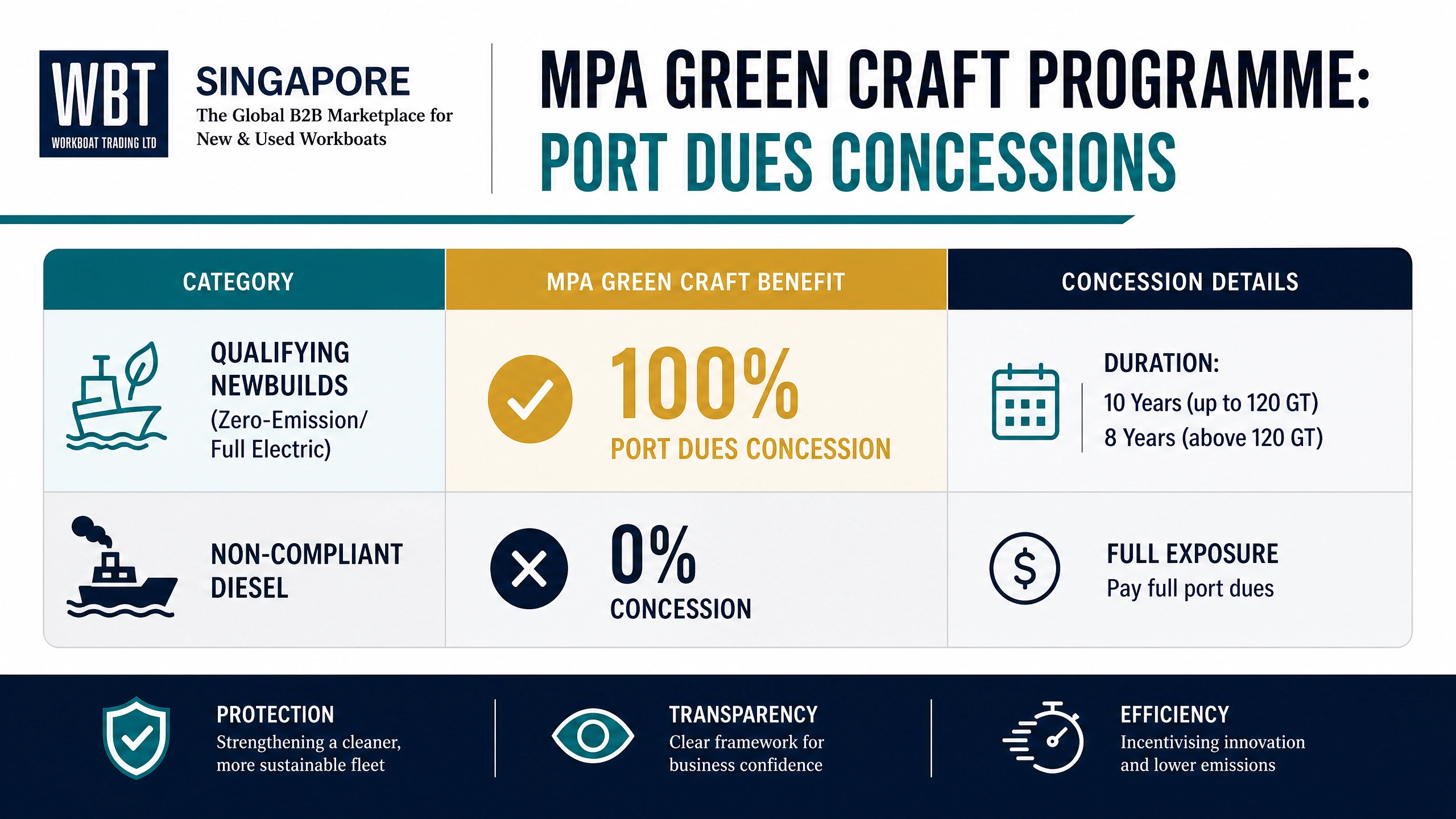
- MPA’s Green Craft Programme provides up to 100% Singapore port dues concessions for qualifying newbuild harbour craft using zero-emission technology or zero-carbon fuels, with concession periods varying by vessel type and gross tonnage.
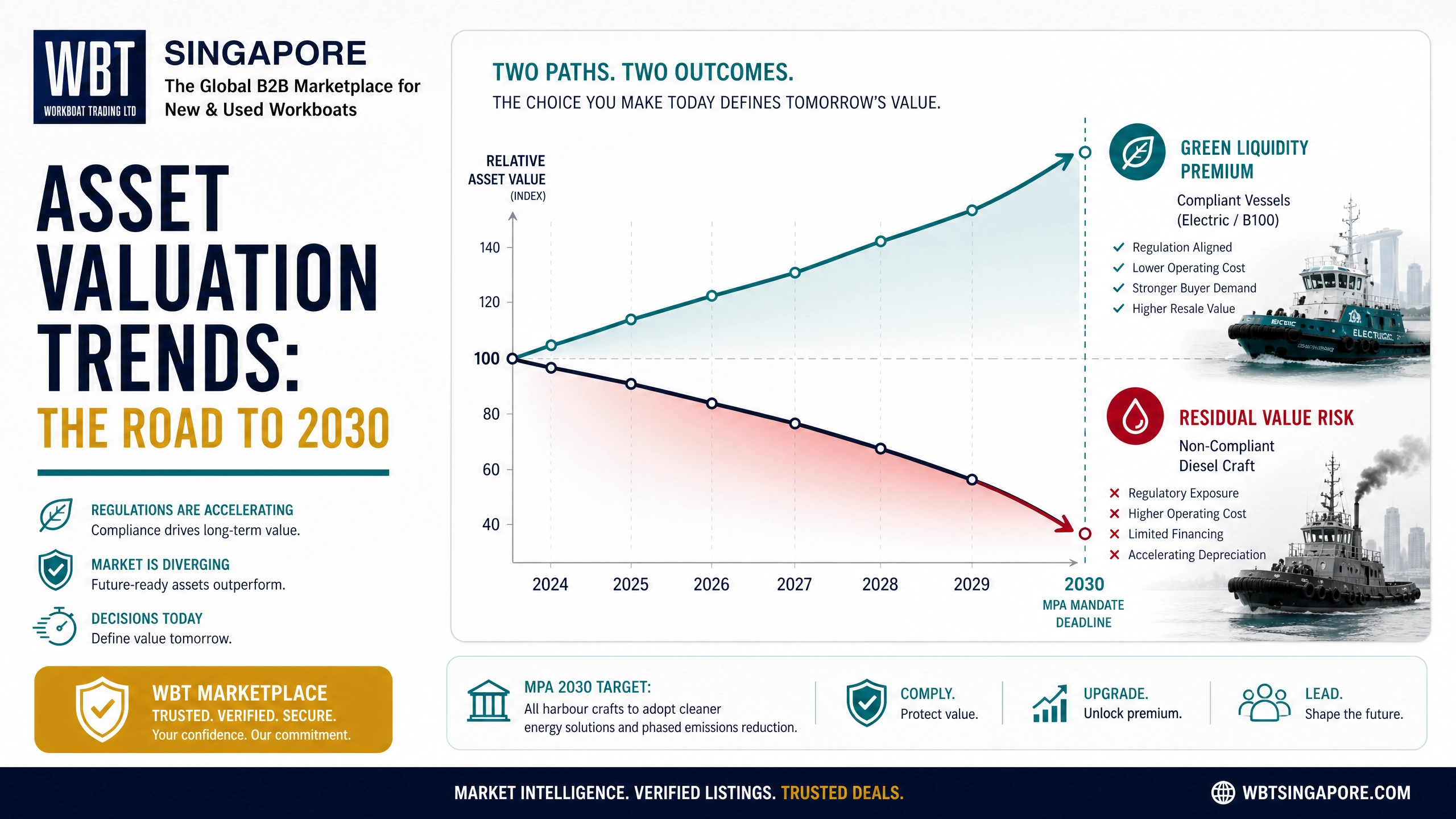
- Non-compliant diesel harbour craft are likely to face declining residual value as maritime compliance, vessel life-cycle costs, and sustainable maritime transition requirements reshape Singapore’s B2B vessel market.
Regulatory Context: Why 2030 Matters
The Maritime and Port Authority of Singapore’s 2030 harbour craft mandate is not merely an environmental policy; it is a structural intervention in vessel design, financing, chartering, and resale. Singapore’s decarbonisation blueprint identifies domestic harbour craft as a core transition segment, with all harbour craft moving toward low-carbon energy solutions by 2030 and progressively toward full-electric propulsion and net-zero fuels by 2050.
For fleet managers and maritime investors, the practical implication is clear: propulsion compliance is becoming a primary asset-quality criterion. Harbour craft that once traded primarily on age, engine hours, class condition, and operational suitability must now be evaluated against fuel compatibility, emissions pathway, port dues exposure, and upgrade feasibility.
Fully Electric Harbour Craft
Technical Requirements
A fully electric harbour craft uses battery-electric energy storage and electric propulsion motors without conventional onboard combustion as the primary propulsion source. In naval architecture terms, this shifts the design problem from fuel tankage and engine-room ventilation toward battery weight, electrical safety, charging interface, fire protection, and thermal management.
Battery systems must be sized against the vessel’s actual duty cycle. A launch boat operating short, predictable routes can be electrified more easily than a tug or multipurpose workboat with variable bollard load, standby periods, and extended service windows. Designers must calculate energy demand across acceleration, cruising, loitering, hotel load, and reserve margins.
Commercial Implications
Fully electric vessels are likely to command a valuation premium in Singapore because they align directly with regulatory direction and may qualify for stronger Singapore port dues concessions. MPA’s port dues framework provides 100% concessions for qualifying newbuild craft using zero-emission fuel or technology, including full electrification, with listed durations including 10 years for qualifying craft up to 120 GT and 8 years for qualifying craft above 120 GT.
The main economic challenge is upfront capital expenditure. Batteries, charging systems, high-voltage integration, and safety systems raise initial build cost. However, lower energy cost, fewer moving components, reduced engine maintenance, and port dues concessions can improve vessel life-cycle costs over a long operating horizon.
B100 Biofuel-Capable Harbour Craft
Technical Requirements
A B100 biofuel-capable vessel is designed or certified to operate on 100% biofuel, commonly fatty acid methyl ester or other approved renewable marine biofuel formulations. MPA identifies B100 biofuel as a zero-carbon fuel pathway under its concession categories for newbuild craft.
Technically, B100 compatibility requires more than simply filling a diesel tank with biofuel. Operators must assess fuel seals, elastomers, filtration systems, microbial contamination risk, fuel stability, cold-flow properties, tank cleaning requirements, and engine manufacturer approval. Biofuel’s solvent effect can dislodge deposits in older tanks, increasing filter loading during early operation.
Commercial Implications
B100 compatibility is attractive because it preserves familiar internal combustion architecture. This reduces retraining needs, avoids immediate dependence on high-capacity charging infrastructure, and may allow operational flexibility for vessels with long duty cycles. For fleet managers with mixed routes and uncertain charging access, B100 offers a lower-disruption compliance pathway.
However, biofuel economics remain exposed to feedstock availability, sustainability certification, fuel pricing, and lifecycle emissions verification. Singapore’s maritime compliance direction suggests that future procurement will not only ask whether a vessel can burn B100, but whether the fuel supply chain can prove credible emissions reduction.
Net-Zero Fuel-Compatible Vessels
Technical Requirements
A net-zero fuel-compatible vessel is designed to use fuels such as hydrogen, ammonia, green methanol, or other low- or zero-carbon energy carriers. MPA specifically references net-zero fuels such as hydrogen in the 2030 harbour craft requirement.
This pathway is technically complex because each fuel imposes different architectural constraints. Hydrogen requires storage volume, ventilation, leak detection, hazardous zone management, and either fuel-cell or combustion integration. Ammonia requires toxicity controls and material compatibility. Methanol requires fuel-system modifications, fire-safety design, and tankage planning.
Strategic Value
Net-zero compatibility may be most relevant for newbuilds intended to operate beyond 2035–2040, where investors want optionality. A vessel built with reserved space, structural allowances, and modular engine-room planning may preserve conversion value even if the final fuel pathway remains uncertain.
Economic Impact on the Singapore B2B Vessel Marketplace
Port Dues and Operating Cost
The 100% port dues concession materially alters the cost model for compliant vessels. In a high-utilisation harbour environment, recurring dues form part of predictable operating expenditure. Removing or reducing those costs improves cash flow and can strengthen charter competitiveness.
Residual Value of Non-Compliant Diesel Craft
Non-compliant diesel harbour craft face a residual value challenge. As 2030 approaches, buyers will increasingly discount vessels that cannot be converted economically. The discount will be most severe for older craft with limited remaining life, poor machinery access, unsuitable hull volume for batteries or alternative fuel systems, and engines without approved biofuel pathways.
In contrast, compliant vessels may benefit from a “green liquidity premium” in the Singapore B2B marketplace. Investors will likely prefer assets with clear regulatory eligibility, documented fuel capability, and predictable vessel life-cycle costs.
FAQ
What are the Singapore MPA harbour craft regulations 2030?
From 2030, new harbour craft operating in Singapore port waters must be fully electric, capable of using B100 biofuel, or compatible with net-zero fuels such as hydrogen. The rule is part of Singapore’s wider maritime decarbonisation strategy.
Do fully electric harbour craft get 100% port dues concessions?
Qualifying newbuild harbour craft using zero-emission fuel or technology, including full electrification, may receive 100% craft port dues concessions under MPA’s Green Craft Programme. The concession period depends on criteria such as gross tonnage and technology category.
Will diesel harbour craft lose resale value in Singapore?
Diesel harbour craft that cannot demonstrate a credible compliance or conversion pathway are likely to face weaker residual values. Buyers will price in future maritime compliance risk, retrofit cost, and reduced charter attractiveness.
Is B100 biofuel a long-term solution for harbour craft?
B100 can be a practical transition pathway, especially for vessels that need longer endurance than current battery systems allow. Its long-term competitiveness depends on certified supply, engine approval, lifecycle emissions accounting, and fuel availability.