
Executive Summary: Key Technical Insights
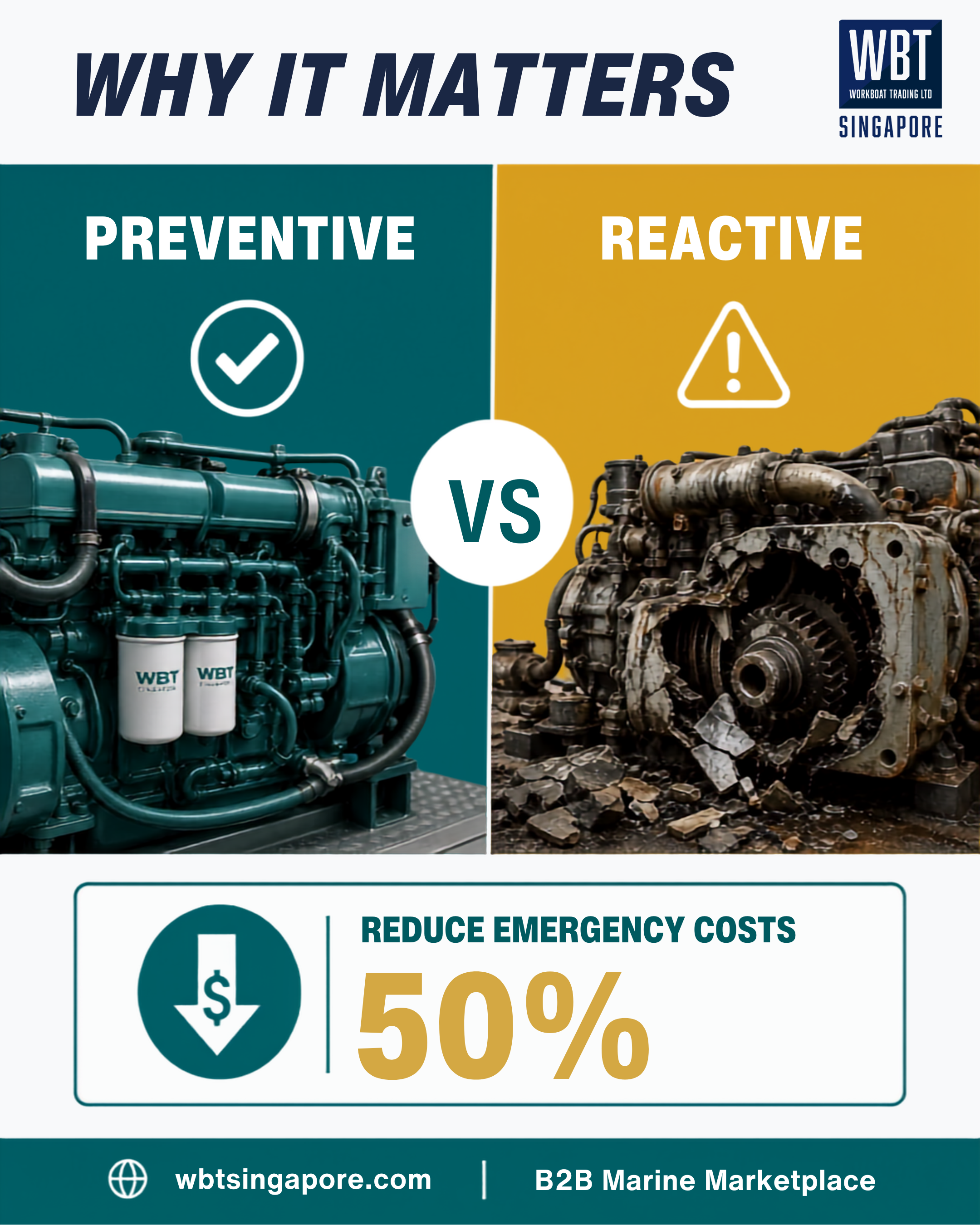
- Preventive vs. Reactive Cost Margins: Implementing a structured preventive maintenance plan reduces emergency repair costs by up to 50% and minimizes unplanned operational downtime.
- Vessel Duty Profiling: Maintenance schedules must be tailored to the vessel's specific operating profile (e.g., high-torque towing vs. light-duty harbor transit) rather than relying solely on generic calendar intervals.
- Critical Systems Focus: Propulsion, cooling, electrical, and steering systems are the primary drivers of machinery-related downtime and require disciplined, hour-based inspection routines.
- Strategic Spare-Parts Management: Maintaining a curated on-board inventory of critical consumables and long-lead components eliminates minor-fault delays, which account for a high percentage of avoidable downtime.
- Recordkeeping and Asset Value: Detailed maintenance logs and service histories improve regulatory compliance, streamline classification surveys, and significantly enhance resale value in the B2B vessel marketplace.
Why Maintenance Planning Matters
For commercial operators, a workboat is a revenue-generating asset rather than a leisure craft. This distinction changes the entire economics of vessel management. When a recreational vessel experiences a breakdown, the consequence is typically a canceled weekend; when a commercial workboat goes offline, the consequences include lost charter revenue, idle crews, penalties for delayed projects, and damaged reputation with key port clients.
The true cost of workboat downtime is rarely limited to the drydock invoice or the price of replacement parts. In competitive hubs like the Port of Singapore, operators must factor in the opportunity cost of missed jobs and potential breach-of-contract claims. A robust preventive maintenance strategy is therefore not an administrative expense, but a core risk mitigation tool. It ensures that the vessel stays in active service, earning revenue and maintaining class compliance. For fleet managers looking to evaluate technical presentation or browse pre-owned inventory, a clear record of consistent maintenance is the single most reliable indicator of a vessel’s performance and long-term viability. This transparency is key when browsing available Singapore vessel listings or assessing listings in the B2B marketplace.
Build Around Vessel Duty & Operating Environment
A common mistake in maritime operations is applying a one-size-fits-all maintenance schedule. A harbor tugboat executing high-bollard-pull maneuvers, a fast crew transfer vessel (CTV) operating at high speeds, and a flat-top utility barge moving heavy deck cargo do not wear out in the same way or at the same rate.
Maintenance plans must be built around the vessel's specific duty cycles and operating conditions. For example:
- Tugboats: Subjected to high thermal stress and torque, demanding frequent gearbox inspections, shaft alignment checks, and engine oil analysis.
- High-Speed Patrol & CTVs: Experience extreme vibration and cyclic loading, requiring strict monitoring of hull weld integrity, structural mounts, and high-speed inboard vs outboard motor choice.
- Utility Barges: Require focus on corrosion control, deck load-bearing structures, and fendering systems.
Additionally, the tropical waters of Southeast Asia pose unique challenges. Year-round water temperatures exceeding 28°C and high salinity accelerate electrochemical corrosion and biofouling. If biofouling is left unmanaged in sea chests and heat exchangers, it leads to engine overheating and reduced fuel efficiency. Furthermore, as the industry transitions toward compliance with the MPA 2030 decarbonisation mandate, maintenance planning must also incorporate new battery-electric and hybrid system checks to ensure safe and efficient local operations.
Focus on Critical Systems: A Complete Health Program
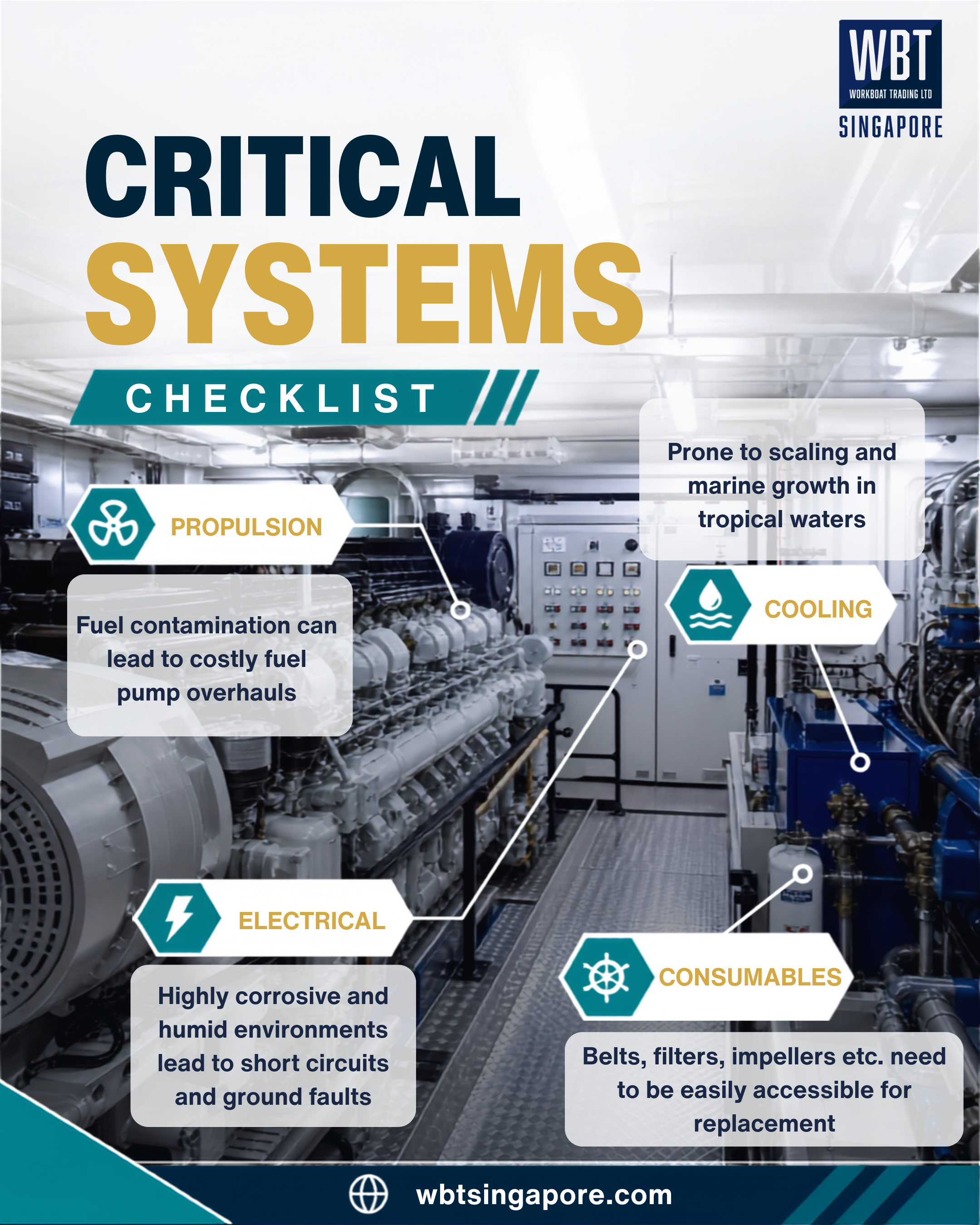
A comprehensive workboat maintenance plan covers all critical subsystems, treating the vessel as an integrated machine.
1. Propulsion & Engine Room Machinery
The main engines and gearboxes are the heart of the vessel. Oil and fuel filter changes must follow manufacturer guidelines strictly, but operators should also use fluid analysis (lubricating oil testing) to detect early signs of bearing wear, fuel dilution, or coolant leaks.
- Cooling Systems: Raw-water cooling systems in tropical environments are prone to scaling and marine growth. Heat exchangers must be chemically cleaned and pressure tested periodically, and sacrificial anodes inside the cooling jackets must be replaced before they degrade completely.
- Fuel Quality: Diesel contamination from water and microbial growth is a frequent cause of fuel injector failure. Installing high-capacity water separators and implementing regular fuel tank stripping can prevent costly fuel pump overhauls.
2. Steering & Auxiliary Systems
Steering gear failures pose immediate safety risks. Hydraulic steering cylinders, pump connections, and rudder stock seals must be inspected weekly for leaks. Emergency steering gear must be tested regularly to ensure compliance with harbor regulations.
- Electrical Distribution: Marine electrical systems operate in highly corrosive, humid environments. Regular insulation resistance testing (megger testing) helps locate deteriorating cable jackets before they cause short circuits or ground faults. Bilge pump float switches and alarm panels must be tested weekly to prevent flooding incidents.
3. Hull Integrity & Corrosion Protection
Workboat hulls require active protection against galvanic and localized corrosion.
- Sacrificial Anodes: Zinc or aluminum anodes must be inspected during underwater surveys and replaced when they have wasted by 50%.
- Coating Maintenance: Maintaining the hull's epoxy coating prevents steel wastage or aluminum pitting. Choosing the right hull material (steel vs. aluminium vs. GRP) dictates the specific repair and protection methods required.
Manage Spares and Downtime: The Logistics of Uptime
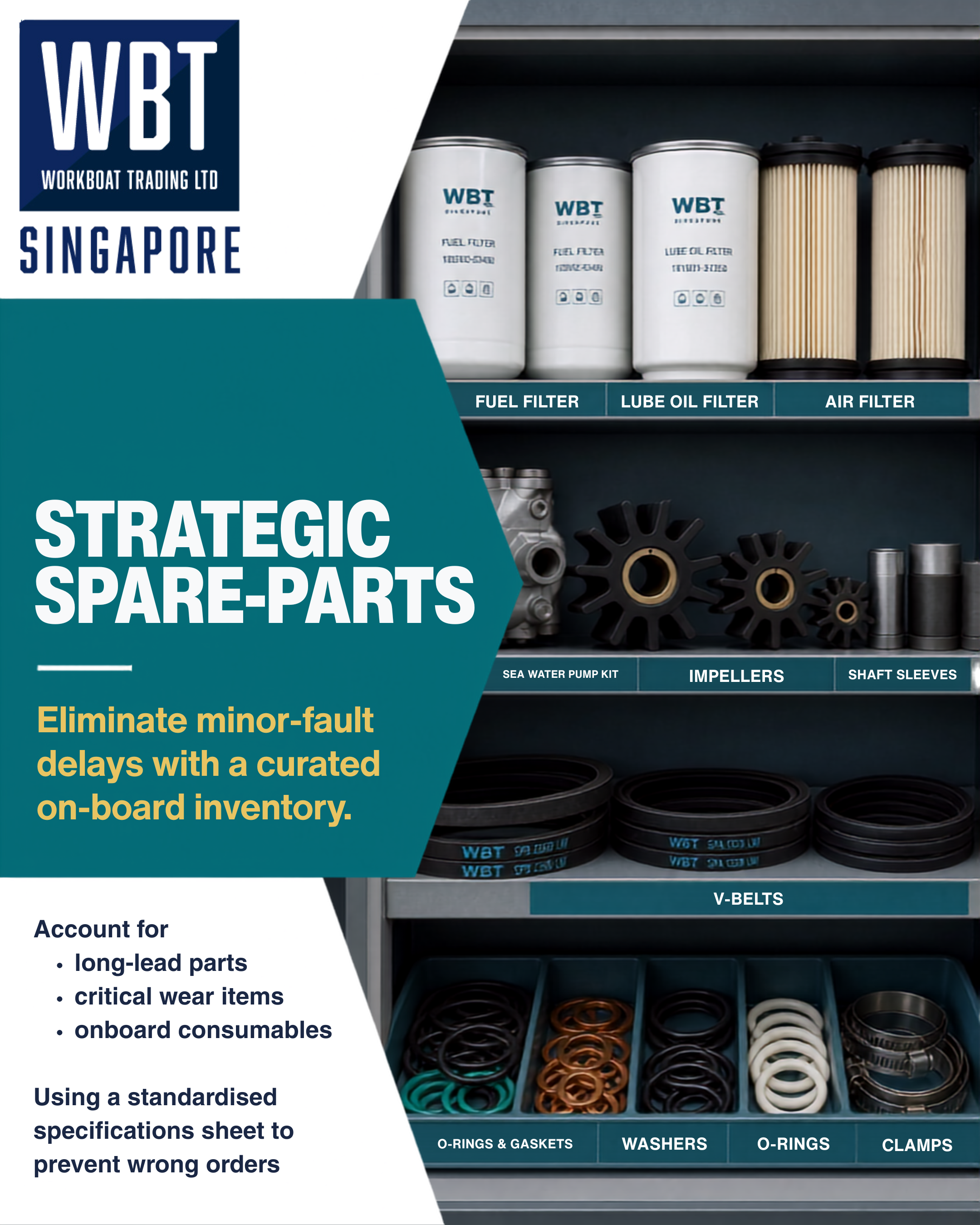
Many instances of vessel downtime are caused by minor, inexpensive parts that are not available when needed. A workboat can be forced to remain idle at the pier for days waiting for a $50 sensor, a custom-sized gasket, or a specific replacement fuel filter.
To prevent these delays, operators must implement a structured spare-parts hierarchy:
- Onboard Consumables: Impellers, belts, fuel/oil filters, fuses, and hydraulic seals should always be stored in the vessel's engine room.
- Critical Wear Items: Alternators, starter motors, primary cooling pumps, and steering valves should be stocked at the operator's shore-side facility.
- Long-Lead Parts: Propeller shafts, custom gear couplings, and engine electronic control units (ECUs) should have established supply chains with local distributors.
Using standard technical documents like a vessel specifications sheet ensures that replacement parts are ordered using exact part numbers and engineering dimensions. This eliminates the risk of ordering incorrect fittings that cause further delays.
Budgeting for the Full Lifecycle
Effective maintenance planning requires budget discipline. Relying solely on historical averages or allocating a flat annual sum often leads to underbudgeting. This is because maintenance costs do not follow a linear path; they peak during scheduled dry-docking and major class survey intervals.
A realistic operating budget must separate recurring expenses from capital expenditure:
- OPEX (Operational Expenditure): Regular consumables, oil analysis, monthly service visits, and routine crew maintenance tasks.
- CAPEX (Capital Expenditure): Scheduled shipyard dry-docking, major engine overhauls (typically every 10,000 to 20,000 operating hours), and mandatory equipment upgrades.
When planning long-term budgets, fleet managers must factor in the five-year classification survey cycle, which involves hull thickness measurements, shaft withdrawals, and safety equipment recertifications. Understanding the broader regional economy, as outlined in the APAC Workboat Market Outlook 2026, helps operators align their fleet investment strategies with changing charter rates and shipyard capacities.
Recordkeeping: Turning Logs into Asset Value
A maintenance log is not just operational paperwork; it is a key financial asset. Detailed records provide concrete proof of a vessel's condition, which is vital during sales negotiations, insurance reviews, and charter audits.
When a vessel is listed for sale on a professional platform, buyers look for a complete history of care. A well-documented maintenance history increases buyer confidence, minimizes price negotiations, and accelerates the transaction process. Operators can use the WBT Singapore platform to present technical specifications and service histories transparently to qualified buyers.
- Digital Planned Maintenance Systems (PMS): Transitioning from paper logbooks to digital PMS allows operators to track component run times, schedule alerts for upcoming maintenance tasks, and store digital copies of service receipts and survey reports. This digital trail helps verify that the vessel has been maintained to class standards, reducing compliance risks.
Creating an Actionable Routine
The most successful maintenance programs rely on consistent routines. A simple, disciplined structure ensures that minor issues are identified and resolved before they develop into major mechanical failures:
- Daily: Check engine oil levels, coolant levels, bilge water levels, and steerage response before departure.
- Weekly: Test bilge alarms, check battery voltages, inspect belts, and visually examine engine mounts.
- Monthly: Inspect sacrificial anodes inside heat exchangers, test emergency safety systems, and check hydraulic fluid levels.
- Every 250/500 Hours: Complete engine oil changes, renew fuel/oil filters, inspect raw-water pump impellers, and analyze oil samples.
By instilling this discipline across the crew and shore-side management, operators can protect their equipment, ensure safety, and improve the long-term profitability of their fleet.
FAQ
What are the most common causes of workboat downtime in Singapore?
Machinery failures represent the most common cause of unplanned downtime, with fuel contamination, cooling system blockage due to biofouling, and electrical ground faults being the primary culprits. Regular fuel tank cleaning, heat exchanger descaling, and insulation testing can prevent these issues.
How do I transition my maintenance plan for the MPA 2030 green mandate?
Transitioning to hybrid or battery-electric operations requires updating your maintenance protocols to include battery health monitoring, high-voltage safety checks, thermal management system inspections, and specialized crew training. Read our complete guide on navigating the MPA 2030 mandate for details.
How should engine-hours guide maintenance intervals compared to calendar time?
For commercial workboats, maintenance intervals should be driven by engine operating hours (e.g., oil changes every 250 hours) rather than calendar time. However, calendar-based intervals should still be used for components that degrade over time regardless of usage, such as seals, anodes, and safety equipment.
How does proper hull maintenance affect fuel efficiency and speed?
Hull fouling and roughness increase hydrodynamic drag, forcing the propulsion system to consume more fuel to maintain the same speed. Regular hull cleaning, anode replacements, and high-performance antifouling coatings can improve fuel efficiency by up to 10–15%. Refer to our guide on hull material selection for details on coating systems.
Why are classification surveys so important to maintenance scheduling?
Classification surveys verify that a vessel complies with structural and safety rules. Aligning your planned maintenance system with your classification survey schedule ensures that the vessel is fully prepared for annual and special surveys, minimizing dry-docking downtime and avoiding class suspension.
How can I prove my vessel's maintenance history to potential buyers on WBT Singapore?
You can upload digital service records, oil analysis reports, and class status documentation directly to your account. This information can then be shared with prospective buyers. Providing a complete service history improves transparency and helps speed up transactions. Learn more about how the platform works to maximize your listing's value.