Executive Summary: Key Technical Insights
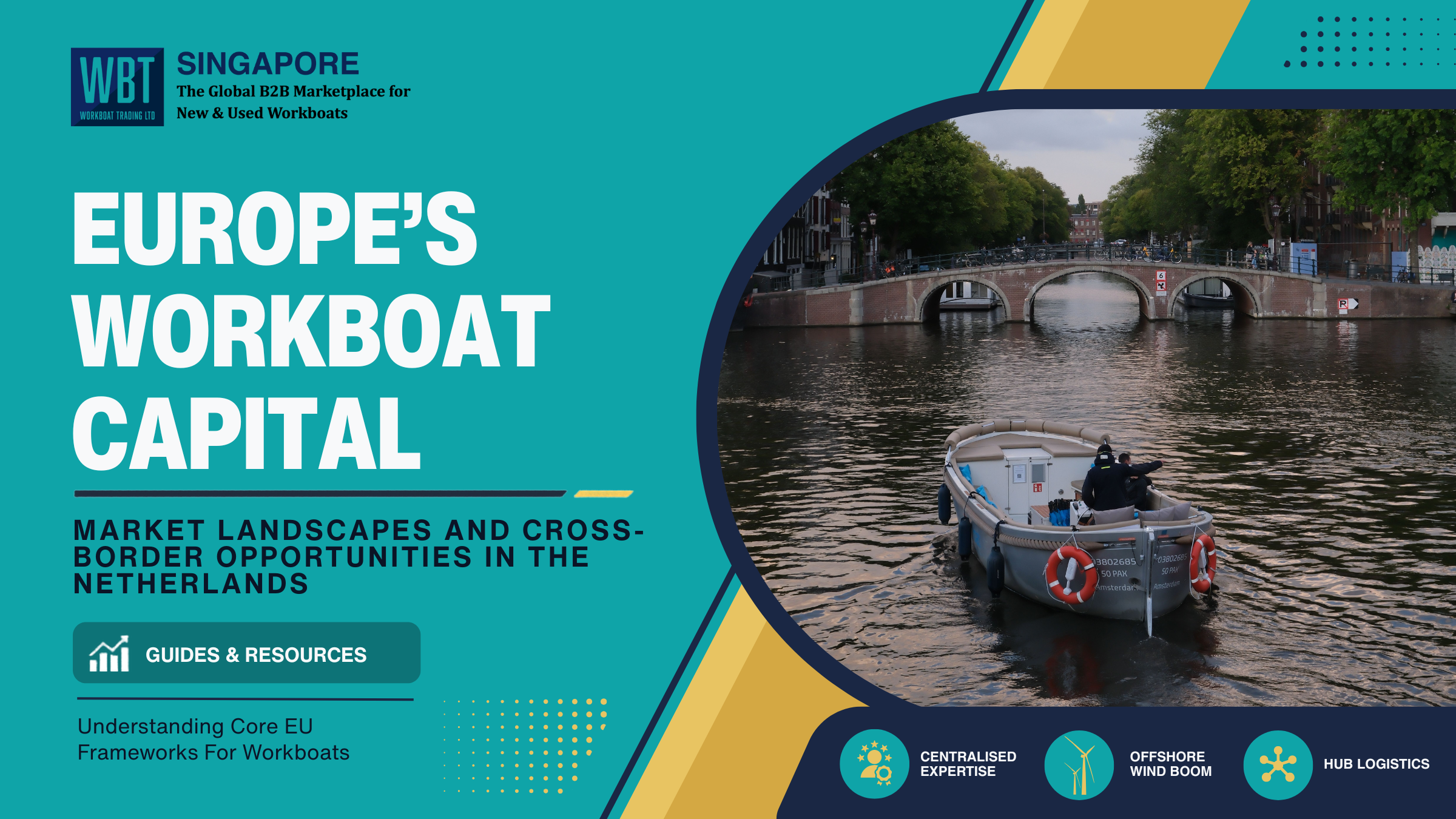
- Centralization of Shipbuilding Expertise: The Netherlands is the leading hub for European workboat design and manufacturing, with shipyards like Neptune Marine and Holland Shipyards Group pioneering specialized commercial craft.
- Offshore Wind Boom: The rapid expansion of North Sea wind capacity—with the Netherlands targeting 21 GW by 2030 and North Sea countries collectively aiming for over 120 GW—is driving unprecedented demand for Fast Crew Transfer Vessels (CTVs), Service Operation Vessels (SOVs), and Walk-to-Work (W2W) support tonnage.
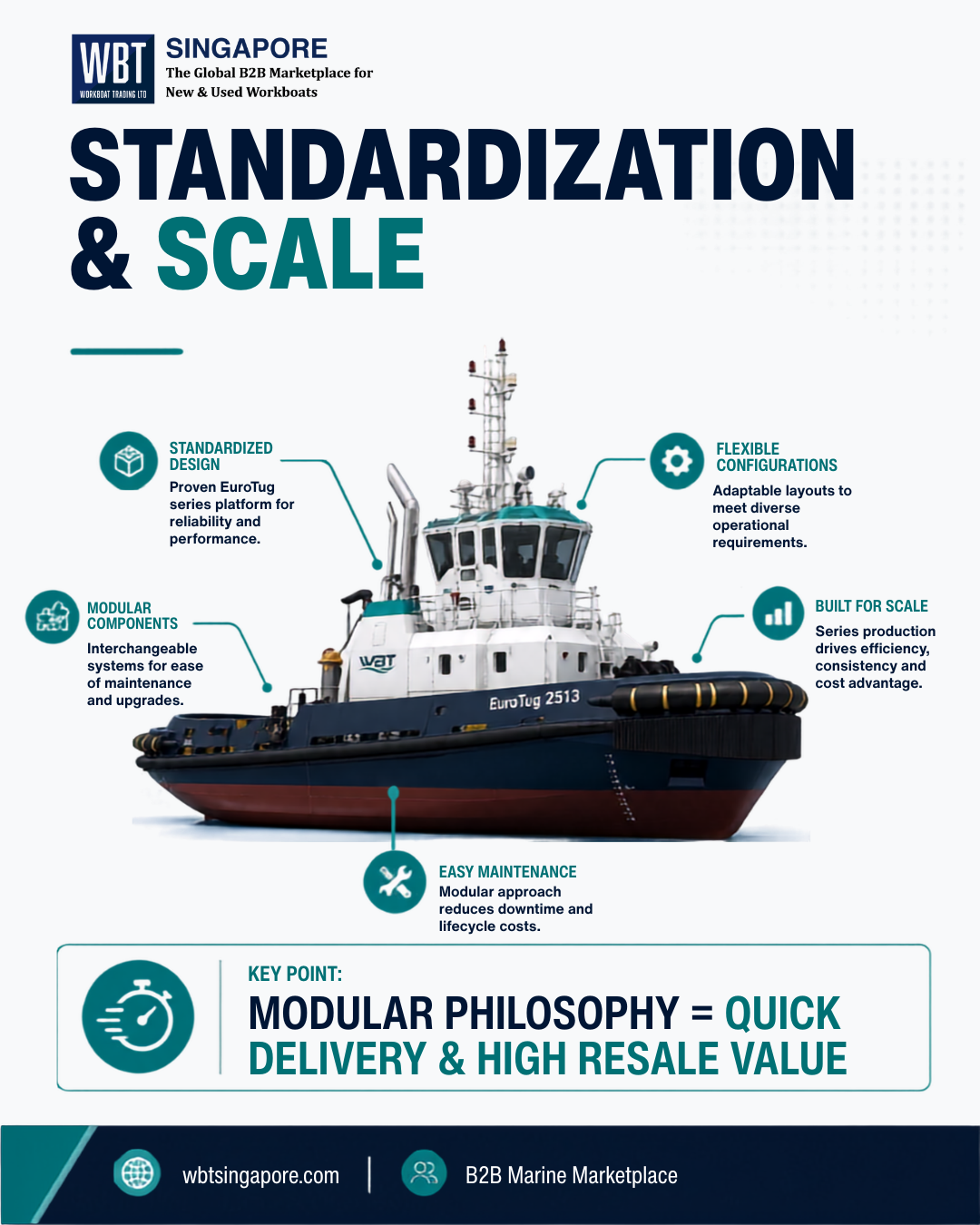
- Standardization vs. Bespoke Projects: Neptune Marine's series-built philosophy (e.g., the EuroCarrier and EuroTug series) provides quick delivery and high resale value, whereas Holland Shipyards Group excels in bespoke zero-emission conversions and project-specific builds.
- Hub Logistics: Rotterdam, Amsterdam, and Harlingen act as critical commercial and support hubs, hosting extensive maintenance, classification, and supply chain infrastructure.
- Cross-Border Sourcing: European operators can leverage B2B marketplaces to source high-specification, second-hand Dutch vessels, taking advantage of the region's early adoption of advanced propulsion and hull designs.
Introduction
The Netherlands represents the absolute epicenter of high-end workboat design, engineering, and sustainable integration in Europe. The Dutch maritime cluster has built a global reputation for producing highly efficient, technically advanced, and durable vessels. This position is the product of centuries of delta-based navigation, combined with a highly integrated domestic supply chain that links shipyards directly with specialized marine engineering firms, propulsion designers, and academic research institutes.
For fleet managers, operators, and marine brokers operating in the North Sea, Baltic Sea, and Mediterranean, understanding the Dutch workboat market is essential. As the North Sea offshore wind energy sector undergoes a massive expansion, the design paradigms established in the Netherlands are shaping the future of offshore logistics worldwide. For European operators, this region represents a premier source of high-specification, second-hand tonnage and cutting-edge engineering solutions. Finding and acquiring these assets requires a deep understanding of the local shipbuilding ecosystem and the technical characteristics of Dutch-designed vessels.
The Pillars of Dutch Shipbuilding: Standardized Series vs. Custom Innovation
The Dutch shipbuilding industry is anchored by two contrasting but highly successful approaches to vessel construction and design. Both models rely heavily on the Dutch "co-makership" model, where shipyards collaborate closely with independent engineering bureaus (such as Conoship International or Vripack) and specialized local subcontractors for electrical systems (e.g., Alewijnse, Bakker Sliedrecht) and thrusters.
Standardization and Scale: The Modular Philosophy
Several prominent Dutch shipbuilders, such as Neptune Marine, focus on a standardized, series-built model. By building vessels in series to standardized designs, shipyards achieve economies of scale, short delivery times, and consistent build quality.
- Standardized Series (e.g., EuroCarrier and EuroTug): Neptune Marine's EuroCarrier and EuroTug series represent some of the most widely used utility workboats and multicats in Europe. These vessels feature standardized deck layouts, heavy-duty hydraulic crane integrations, and standardized winch capacities.
- Hull Engineering: These designs focus on maximizing deck space, stability, and bollard pull. The hulls are optimized for multi-role functionality—capable of executing dredging support, anchor handling, towing, and marine construction. They are characterized by wide beams, double-drum winches with high line-pull ratings (often exceeding 50 to 100 tonnes), and heavy-duty bow and stern rollers.
- Asset Value and Maintenance: Standardized builds mean that replacement parts and technical documentation are easily accessible across Europe. This standardization directly reduces operational downtime and ensures that pre-owned Dutch vessels command premium prices and high liquidity in the B2B vessel marketplace.
Custom Innovation and Electrification: Holland Shipyards Group
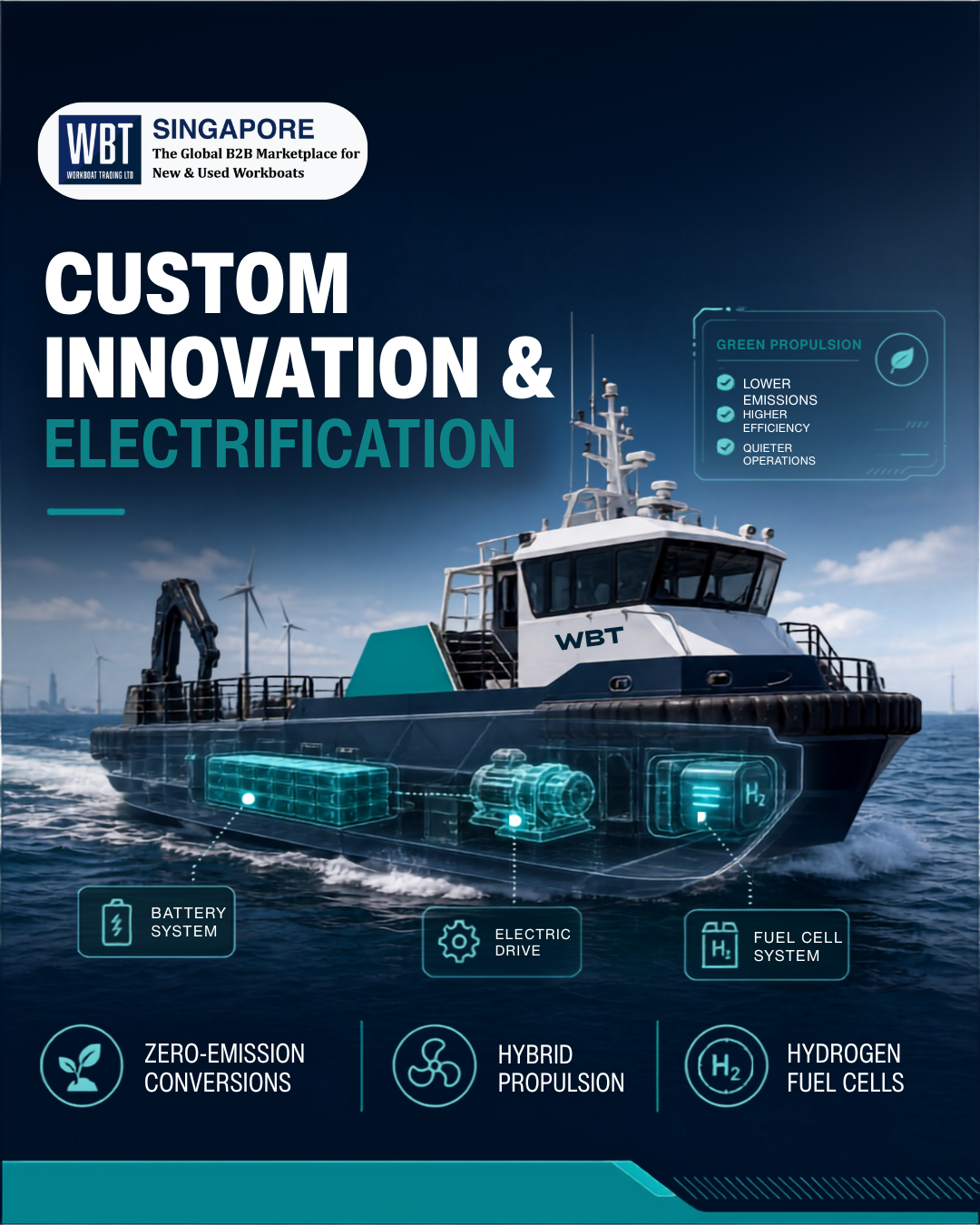
In contrast to standard series-built scale, Holland Shipyards Group (HSG) has carved out a niche centered on custom engineering, electrification, and project-specific conversions.
- Decarbonisation Frontrunners: HSG is a major driver of green propulsion in Europe, delivering fully electric commuter ferries, hybrid tugs, and retrofitted vessels equipped with hydrogen fuel cells.
- Build-to-Suit Flexibility: Rather than relying on a fixed line of hulls, HSG operates on a bespoke basis. This flexibility makes them a primary partner for operators requiring unique adaptations for specialized offshore projects, scientific research, or localized port operations where standard designs cannot meet specific regulatory or physical constraints. Their projects often involve integrating advanced energy storage systems (ESS) and electric drive systems directly into existing hull envelopes, minimizing the environmental footprint of new fleet capacity.
Offshore Wind: The Engine of North Sea Workboat Demand
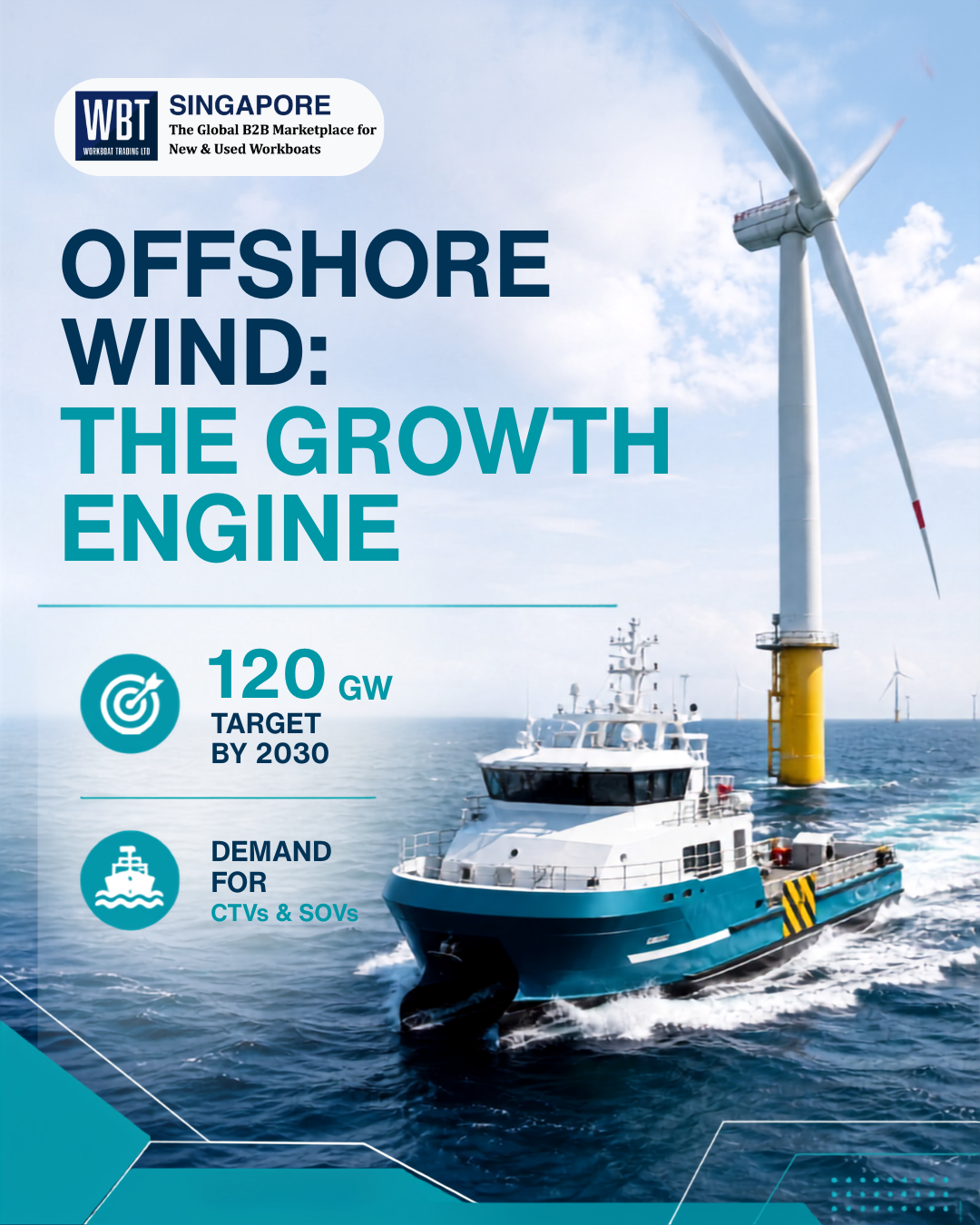
The fastest-growing driver of workboat demand in Europe is the North Sea offshore wind industry. Under the Ostend Declaration, European nations have committed to installing 120 GW of offshore wind by 2030 and 300 GW by 2050. Meeting these targets requires a massive support fleet. This rapid expansion has shifted wind farms further offshore into deeper waters and harsher environments, requiring workboats to undergo significant structural and technological evolutions.
This demand has created two primary vessel classes:
Crew Transfer Vessels (CTVs)
Typically high-speed aluminum catamarans between 20 and 30 meters, CTVs transport technicians and light cargo daily from shore bases to wind turbines.
- Hull Dynamics and Hull Form: The rough, choppy waters of the North Sea require CTVs to feature active motion-stabilization systems and specialized hull forms. Hydrofoil-assisted catamarans (HYSUCAT) and advanced hull designs are increasingly deployed to minimize vertical acceleration and roll. These systems allow CTVs to maintain high cruising speeds (often 25–30 knots) while minimizing structural stress and reducing crew fatigue.
- Bollard Push and Safety: CTVs require high bollard push to press their bows securely against the turbine transition piece (TP) fender during technician transfer. Advanced fender systems, utilizing customized elastomers, absorb structural impact and maximize the safe transfer window. The bow shape is optimized to fit the TP fender, and active thrust control systems help the skipper maintain constant pressure without overloading the propulsion machinery.
- Alternative Hull Forms: Operators are increasingly evaluating Small Waterplane Area Twin Hull (SWATH) designs and Surface Effect Ships (SES). SWATH vessels reduce wave-induced motions by placing the buoyant volume below the water surface, though they trade off speed and fuel efficiency compared to catamarans. SES vessels utilize an air cushion between catamaran hulls to lift the vessel, reducing draft and drag, allowing high speeds and improved seakeeping in moderate seas.
Service Operation Vessels (SOVs)
Larger, steel-hulled vessels (typically 60 to 90 meters) designed to remain offshore for weeks at a time.
- Walk-to-Work (W2W) Gangways: SOVs act as floating hotels and workshops, utilizing motion-compensated W2W gangways (such as those engineered by Ampelmann or Uptime) to transfer personnel safely to turbine platforms. These systems use active sensors and hydraulic cylinders to counteract ship motion in real-time, allowing safe walking transfers in wave heights up to 3.0 meters significant wave height ($H_s$). They offer six degrees of freedom compensation (surge, sway, heave, roll, pitch, and yaw), ensuring that the gangway tip remains stationary relative to the wind turbine platform.
- Dynamic Positioning (DP): To maintain position adjacent to turbines, SOVs be equipped with Class 2 Dynamic Positioning (DP2) systems, utilizing multiple redundant thrusters, GPS, and laser-based relative positioning sensors (such as CyScan or Guidance Marine). DP2 requires physical separation of electrical systems, switchboards, and fuel supplies, ensuring that no single failure can result in loss of position during close-quarters operations.
The engineering required for North Sea operations is highly specialized. European workboats are heavily winterized, feature high freeboards to handle Atlantic swells, and increasingly incorporate hybrid or all-electric propulsion to comply with strict regional environmental mandates.
Commercial and Operational Hubs: Rotterdam, Amsterdam, and Harlingen
The operational efficiency of the Dutch fleet is backed by world-class port infrastructure.
- Port of Rotterdam: As Europe’s largest port, Rotterdam is a massive maritime logistics and bunkering hub. It hosts specialized ship repair yards, major classification society offices (such as Bureau Veritas, Lloyd's Register, and DNV), and extensive spare parts distribution networks. It is also a key testing ground for autonomous shipping and green fuel bunkering.
- Port of Amsterdam: Focused on circular logistics and maritime innovation, Amsterdam provides key staging grounds for municipal craft and regional cargo transport.
- Harlingen: Situated on the edge of the shallow Wadden Sea, Harlingen is the focal point for shallow-water vessel construction and specialized research craft. Yards like Thecla Bodewes Shipyards build shallow-draught vessels here, such as the newly commissioned RV Wim Wolff, which is optimized for delicate coastal ecosystems. Harlingen's yards benefit from proximity to local steel fabricators, electrical outfitters, and marine propulsion engineers, creating a tight manufacturing cluster.
Intra-European Fleet Transfers & Cross-Border Sourcing
For operators across the United Kingdom, Scandinavia, and Germany, the Dutch market offers highly attractive procurement opportunities. Sourcing pre-owned European-built tonnage from the Netherlands allows operators to acquire high-quality assets with immediate availability and lower capital expenditure than a newbuild.
Technical Presentation & Class
Dutch-built vessels generally benefit from rigorous maintenance histories, dictated by strict European port state controls, class requirements, and domestic legislation. For buyers browsing available vessel listings, a verified service history from a Dutch operator represents a low-risk investment.
Regulatory and Classification Alignment
When transferring a vessel between different European jurisdictions (for example, from the Dutch registry under the Inspectie Leefomgeving en Transport - ILT to the UK flag under the Maritime and Coastguard Agency - MCA), operators must ensure compliance with localized standards:
- Stability and Safety Equipment: While basic hull integrity and stability are governed by international classification societies (DNV, Bureau Veritas, Lloyd's Register), local safety equipment requirements—such as life raft specifications, firefighting systems, and emergency escape layouts—can vary slightly between national regulators. MCA Workboat Codes (e.g., Code of Practice for the Safety of Small Workboats) dictate specific stability booklet requirements and equipment redundancies depending on the vessel's operational area (Area Category 0 to 6).
- Manning and Certification: Operators must ensure that structural arrangements on board, such as cabin sizes, sanitary facilities, and galley layouts, comply with the specific crew accommodation standards of the destination flag state. This includes ensuring compliance with the Maritime Labour Convention (MLC 2006) requirements for larger vessels, which can impose strict limits on cabin volume, noise levels, and vibration tolerances.
- Environmental Certificates: Vessels operating in specialized domestic waterways, such as the German canal system or Dutch national parks, must hold specific low-emission or zero-discharge certifications. For example, operating on inland waterways may require compliance with ES-TRIN (European Standard laying down Technical Requirements for Inland Navigation vessels) or local environmental permits.
- GMDSS Sea Areas: The communication equipment on board must match the GMDSS Sea Area of the destination. A vessel fitted for Sea Area A1 (VHF range) must be upgraded with MF/HF radio or Inmarsat satellite communications if it is relocated to Sea Area A2 or A3 (further offshore, such as parts of the North Sea or Norwegian coast).
Facilitating the Transaction
Sourcing tonnage across European borders requires careful coordination. Buyers must manage drydock surveys, flag state registrations, and transport logistics. Utilizing WBT Singapore's specialized platform tools makes listing and purchasing across borders transparent. Sellers can list their European assets directly at vessel listings, while buyers can review transaction workflows via the how-it-works page or check out platform options on the pricing page.
Conclusion
The Netherlands continues to define the cutting edge of workboat engineering and offshore operations. From standard modular utility workboats to custom green propulsion systems, the Dutch maritime cluster is setting the standard for the global fleet. By monitoring market trends in Europe and leveraging global B2B platforms, operators across the continent can secure high-performing assets that are ready to meet the operational and environmental challenges of tomorrow.
FAQ
What makes Dutch-built workboats highly sought after globally?
Dutch yards are renowned for high-quality engineering, advanced hull designs, and early adoption of sustainable propulsion. Their standardized build models ensure consistent quality, excellent spare-parts availability, and high resale liquidity.
How does the North Sea environment impact the design of European CTVs?
The North Sea requires CTVs to handle rough, cold waters. Designs prioritize high freeboards, winterized cabins, active stabilization, and robust bow-fendering systems capable of maintaining contact with wind turbine pillars in significant wave heights.
What is the difference between a Crew Transfer Vessel (CTV) and a Service Operation Vessel (SOV)?
CTVs are fast, smaller catamarans (20–30m) designed for daily round-trips from shore to offshore structures. SOVs are larger, steel-hulled vessels (60–90m) that remain offshore for 14–30 days, providing living quarters for technicians and utilizing motion-compensated Walk-to-Work gangways.
Can European operators easily import and class a pre-owned vessel from the Netherlands?
Yes, but it requires careful coordination. The vessel must pass a pre-purchase survey and align with local port authority regulations. Because most Dutch vessels are built to international class standards (DNV, Bureau Veritas, Lloyd's Register), transferring class to other European jurisdictions is a standardized process.
How does WBT Singapore assist with international workboat transactions?
WBT Singapore provides a transparent B2B marketplace to browse verified international listings, request documents, and coordinate surveys. Review the how-it-works page to learn how the platform simplifies escrow coordination, documentation checks, and seller verification.