Executive Summary: Key Technical Insights
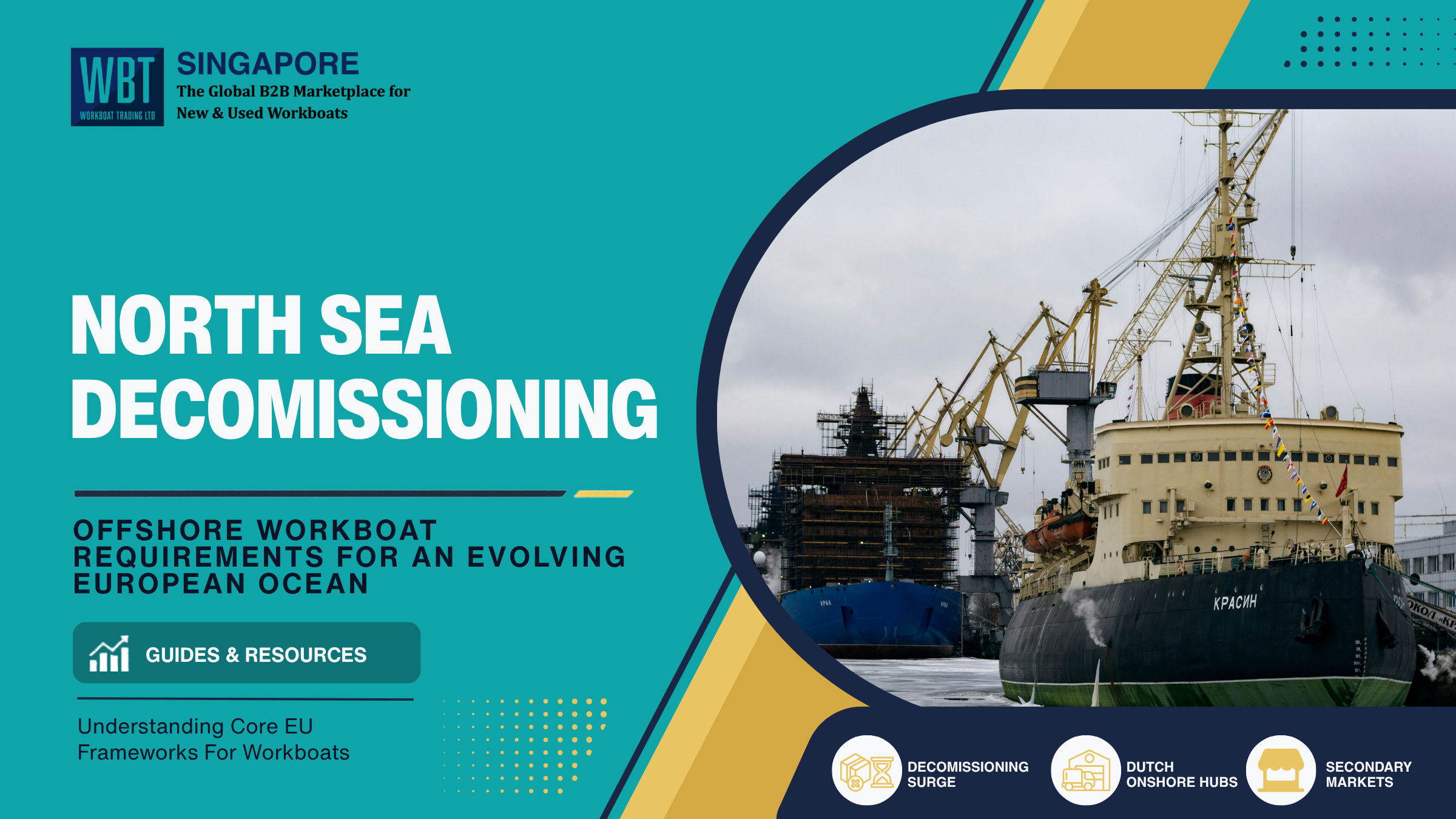
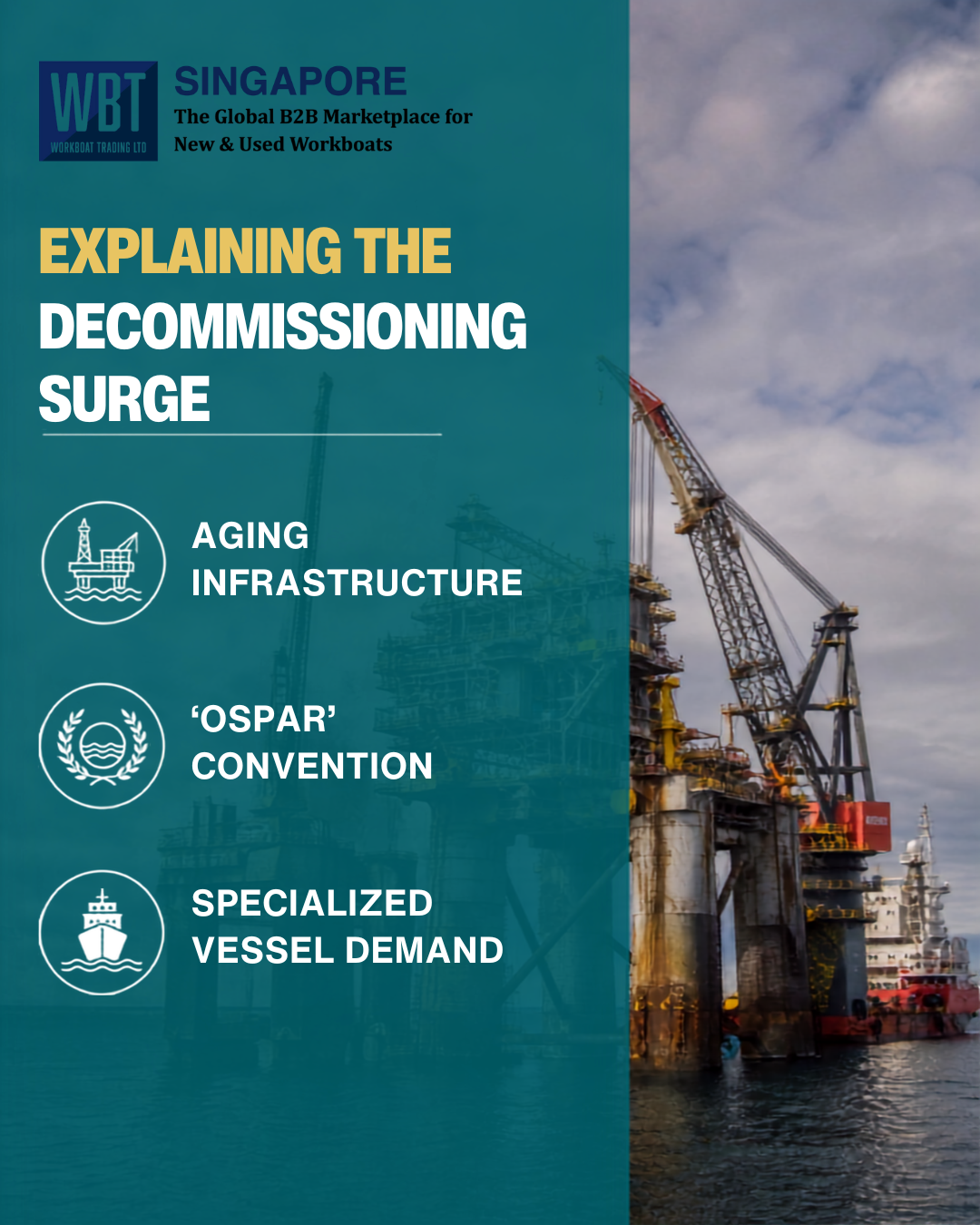
- The Decommissioning Surge: The North Sea is entering a peak phase of offshore decommissioning, driven by aging oil and gas infrastructure and the strict removal requirements of the OSPAR Convention. This is generating immense demand for specialized support vessels, from heavy-lift crane barges to DP2 AHTS units.
- AHTS Deployment: Anchor Handling Tug Supply (AHTS) vessels in the 10,000–16,000 BHP range are critical for positioning massive sheerleg crane vessels and towing decommissioned topsides back to onshore dismantling facilities.
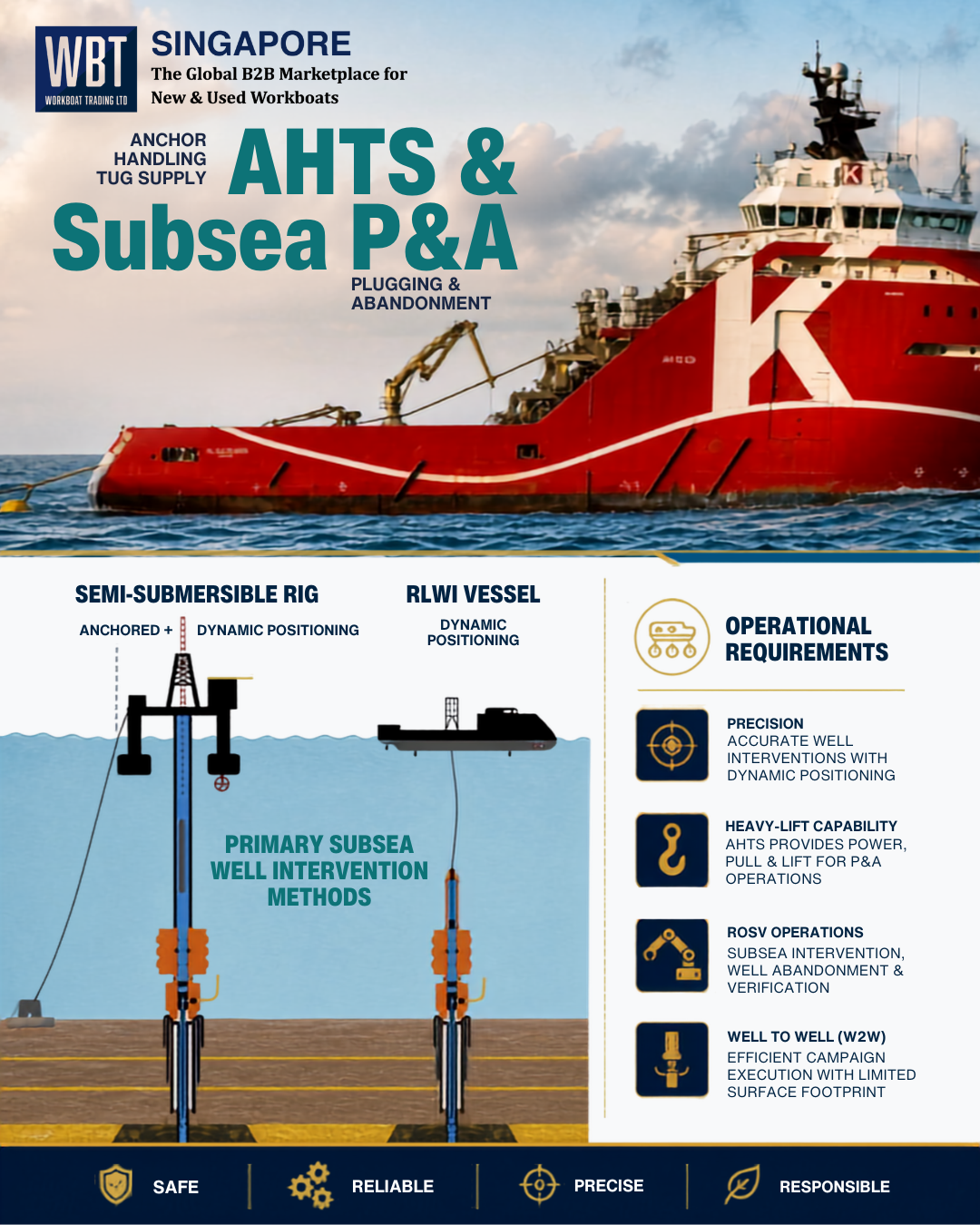
- Subsea Well P&A (Plugging and Abandonment): The most complex phase of decommissioning—well P&A—relies heavily on dynamically positioned (DP2) ROV Support Vessels (ROVSV) and Walk-to-Work (W2W) capable vessels to execute intricate subsea cement plugs without relying on expensive drill ships.
- Onshore Logistics Hubs: Dutch ports, notably Eemshaven and Rotterdam, have developed specialized heavy-load quays, hazardous waste processing centers, and deep-water drafts to receive and recycle decommissioned platforms, acting as the logistical anchors for the North Sea.
- Secondary Market Dynamics: The specialized demands of decommissioning are driving operators to acquire pre-owned, high-specification tonnage. Finding vessels with verified maintenance histories and high bollard pull in the B2B vessel marketplace is crucial for securing lucrative decommissioning contracts.
After more than five decades of intensive oil and gas extraction, the North Sea is undergoing a monumental transformation. The mature basins off the coasts of the UK, Norway, and the Netherlands contain thousands of offshore platforms and subsea wells that have reached the end of their productive lives. Under international environmental mandates, this vast infrastructure must be safely dismantled, plugged, and brought ashore for recycling—a process known as decommissioning.
For the maritime sector, offshore decommissioning represents one of the largest and most technically demanding logistical challenges in modern history. Unlike the construction phase, where new modules are carefully assembled, decommissioning requires handling degraded, structurally compromised, and potentially hazardous materials in harsh offshore environments. This necessitates a highly specialized fleet of workboats, crane vessels, and subsea support craft. Understanding the fleet requirements for North Sea decommissioning is essential for operators and marine brokers looking to capitalize on this multi-billion-euro sector, and leveraging platforms to acquire or deploy specialized workboats will be key to meeting this unprecedented demand.
The Scope of North Sea Decommissioning
The scale of the decommissioning task in the North Sea is staggering. Over the next decade, hundreds of topsides, steel jackets, and subsea structures must be removed.
Regulatory Drivers and the OSPAR Convention
The primary driver for North Sea decommissioning is the OSPAR Convention (Decision 98/3), which generally prohibits the dumping or leaving in place of disused offshore installations. While some exceptions exist for the massive concrete gravity bases of the deepest platforms, the vast majority of steel jackets, topsides, and subsea pipelines must be completely removed to clear the seabed. This strict regulatory environment forces operators into complex, multi-year removal campaigns that require absolute precision to prevent environmental contamination, particularly from residual hydrocarbons and Naturally Occurring Radioactive Material (NORM).
The Scale of Infrastructure Removal
Decommissioning campaigns are typically broken down into several distinct phases:
- Preparation and Cleaning: Flushing pipelines and removing hazardous materials.
- Well Plugging and Abandonment (P&A): Sealing the wellbore permanently.
- Topsides and Jacket Removal: Lifting the heavy steel structures off the seabed.
- Transport and Onshore Disposal: Towing the structures to specialized recycling yards.
Each phase demands a specific class of vessel, creating a layered, sustained charter market for European workboat operators.
Fleet Requirements for Heavy Decommissioning
The physical removal of platforms—some weighing in excess of 20,000 tonnes—requires the mobilization of the heaviest classes of offshore support vessels.
Anchor Handling Tug Supply (AHTS) Vessels
AHTS vessels are the workhorses of the heavy removal phase. Their primary roles include:
- Positioning Heavy-Lift Vessels (HLVs): Massive semi-submersible crane vessels (SSCVs) or sheerleg barges rely on high-capacity AHTS vessels to deploy complex multi-point mooring spreads. AHTS units operating in these campaigns typically require 10,000 to 16,000 BHP and bollard pulls exceeding 150 tonnes.
- Towing Operations: Once a topside or steel jacket is lifted onto a transport barge, AHTS vessels are responsible for the high-risk coastal tow back to the dismantling yard. These tows require dynamic towing winches, robust wire stoppers, and often, the coordination of multiple tugs to safely navigate congested shipping lanes and narrow port approaches.
- Winch and Deck Machinery: Decommissioning places extreme strain on deck machinery. AHTS vessels must be equipped with high-capacity double or triple-drum waterfall winches, heavy-duty stern rollers, and active heave compensation systems to manage the immense forces generated by North Sea swells during towing operations.
Heavy-Lift Barges and Crane Vessels
While standard multicats handle coastal logistics, deep-water removal relies on specialized heavy-lift architecture. Dutch operators excel in deploying dynamically positioned SSCVs capable of lifting entire topsides in a single piece (the single-lift method). For smaller, modular lifts, flat-top transport barges are maneuvered into position by a fleet of nimble, high-bollard-pull harbor tugs and utility workboats, emphasizing the need for coordinated fleet logistics.
Specialized Subsea Support for Well Plugging and Abandonment (P&A)
Well P&A is often the most expensive and time-consuming phase of decommissioning, accounting for up to 45% of total project costs. To reduce reliance on extremely costly drill ships, operators are increasingly executing subsea P&A using specialized support vessels.
Walk-to-Work (W2W) Support and DP2 Logistics
Before a platform is lifted, it must be prepared and made "cold" (free of hydrocarbons).
- Personnel Transfer: This requires transferring large crews of decommissioning specialists to platforms that no longer have functional helidecks or life support systems. DP2-equipped Service Operation Vessels (SOVs) or converted Platform Supply Vessels (PSVs) utilizing motion-compensated Walk-to-Work (W2W) gangways are essential. These systems allow safe personnel transfer in wave heights up to 3.0 meters, ensuring that preparation work can continue through the harsh North Sea autumn and winter.
- Floating Hotels: These vessels act as floating hotels (flotels) and workshops, providing independent power, communications, and emergency response capabilities while stationed alongside the dead platform.
ROV Support Vessels (ROVSV)
Subsea wellheads and pipelines must be severed below the mudline and capped.
- Subsea Intervention: This requires DP2 ROVSVs equipped with Work-Class Remotely Operated Vehicles (WROVs). These vehicles deploy specialized tooling, such as diamond wire saws and abrasive water jet cutters, to slice through thick steel casings and concrete protective domes.
- Deck Capabilities: ROVSVs in this sector require high-capacity active heave compensated (AHC) subsea cranes (typically rated for 100–150 tonnes) to recover severed wellheads and pipeline manifolds from the seabed directly to the vessel's deck.
Onshore Disposal Logistics and Dutch Hubs
The marine logistics chain does not end once the structure is lifted; it must be safely brought ashore and recycled. The Netherlands has positioned itself as the premier destination for North Sea decommissioning disposal.
Eemshaven and Rotterdam: Epicenters of Decommissioning
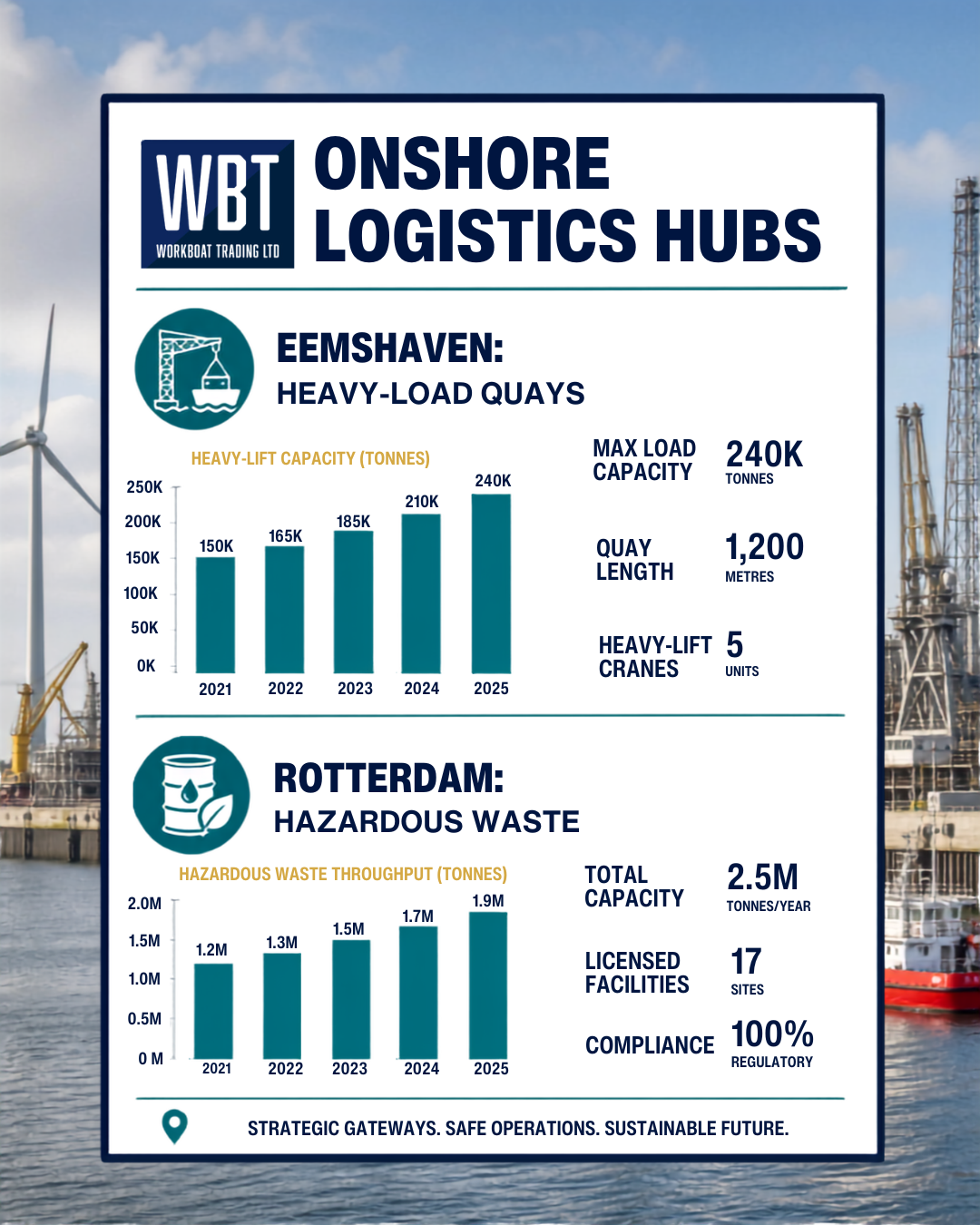
Dutch ports have invested heavily to accommodate the massive drafts and heavy floor loads associated with decommissioned platforms.
- Eemshaven: Located in the northern Netherlands, Eemshaven features dedicated decommissioning quays with extreme load-bearing capacities. The port's deep-water access allows massive SSCVs and heavy transport barges to dock directly alongside specialized recycling facilities, where steel is sheared, sorted, and sent to foundries.
- Port of Rotterdam: Europe's largest port offers unparalleled hazardous waste processing facilities. Decommissioning generates significant volumes of drilling muds, NORM, and contaminated sludges. Rotterdam's specialized treatment centers handle these materials efficiently, ensuring full environmental compliance.
The continuous flow of barges and towing vessels into these ports creates a high-density operational environment, driving demand for shallow-draft harbor tugs, multicats, and port service vessels to assist with final positioning.
Asset Acquisition and the Secondary Market
The long-term horizon of the North Sea decommissioning sector (projected to remain highly active through the 2030s) provides the operational security necessary for fleet managers to invest in high-specification tonnage.
Sourcing vessels for this work is challenging due to the strict technical requirements of major operators like Shell, BP, and TotalEnergies. Pre-owned vessels offer a faster route to market than newbuilds, provided they meet rigorous condition and classification standards. Buyers evaluating assets must scrutinize the vessel's DP system redundancy, winch maintenance records, and hull fatigue history. WBT Singapore provides the necessary platform to evaluate these technical parameters. By utilizing the pricing page and understanding the transaction workflow on the how-it-works page, operators can confidently execute cross-border acquisitions and secure the assets needed to compete in this lucrative market.
Conclusion
North Sea decommissioning is a monumental logistical undertaking that is reshaping the European offshore vessel market. The strict requirements for safe, environmentally responsible removal demand a fleet of powerful AHTS vessels, sophisticated DP2 subsea support craft, and versatile Walk-to-Work platforms. Backed by the specialized onshore infrastructure of Dutch ports like Eemshaven and Rotterdam, the marine supply chain is evolving to meet this challenge. For fleet operators, strategically acquiring and deploying these specialized assets is essential for securing long-term contracts in the final chapter of North Sea oil and gas.
FAQ
Why is there a sudden surge in North Sea decommissioning?
The North Sea contains thousands of mature platforms that have reached the end of their productive lifespans. Under the OSPAR Convention, operators are legally required to remove this disused infrastructure and plug the subsea wells, triggering a massive, multi-decade marine logistics effort.
What role do AHTS vessels play in decommissioning?
Anchor Handling Tug Supply (AHTS) vessels are crucial for positioning the massive heavy-lift crane vessels used to dismantle platforms. They are also responsible for the complex and high-risk coastal towing of decommissioned topsides and jackets from the offshore site to onshore recycling yards.
How do Walk-to-Work (W2W) systems support decommissioning?
Before a platform is removed, it must be prepared by specialist crews. Because disused platforms lack power and functional helidecks, DP2 vessels equipped with motion-compensated W2W gangways are used to safely transfer personnel and act as floating workshops and living quarters.
Why are Dutch ports critical to North Sea decommissioning?
Ports like Eemshaven and Rotterdam have developed specialized, deep-water decommissioning quays with extreme load-bearing capacities. They also house advanced hazardous waste processing facilities to safely handle the NORM and contaminated materials recovered from offshore platforms.
How can operators find the right vessels for decommissioning contracts?
Decommissioning requires highly specialized, high-specification tonnage. Operators can utilize digital B2B marketplaces to source verified pre-owned AHTS and DP2 vessels, bypassing long newbuild lead times. Visit the how-it-works page to learn how to manage technical documentation and vessel acquisitions seamlessly.