
Key Takeaways
- The Sulina Free Zone is finalizing major infrastructure works to establish a critical transshipment hub for agricultural goods coming from Romania, Moldova, and Ukraine.
- The terminal aims to facilitate efficient cargo transfers from river-going vessels and barges to larger maritime cargo ships destined for international markets.
- Authorities are prioritizing a dredging project to increase the Sulina bar depth to 11 meters, which is essential for improving the economic efficiency of high-capacity maritime logistics.
Strategic Pivot in the Danube Delta
The maritime logistics landscape in Eastern Europe is on the verge of a significant transformation as the Sulina Free Zone approaches full operational status. By positioning itself as the primary gateway between the Danube river system and the Black Sea, Romania is effectively creating a transshipment hub designed to capitalize on the increasing necessity for reliable agricultural export corridors. This development is particularly timely, given the ongoing regional geopolitical instability that has necessitated more resilient and diversified trade routes.
Infrastructure and Operational Capacity
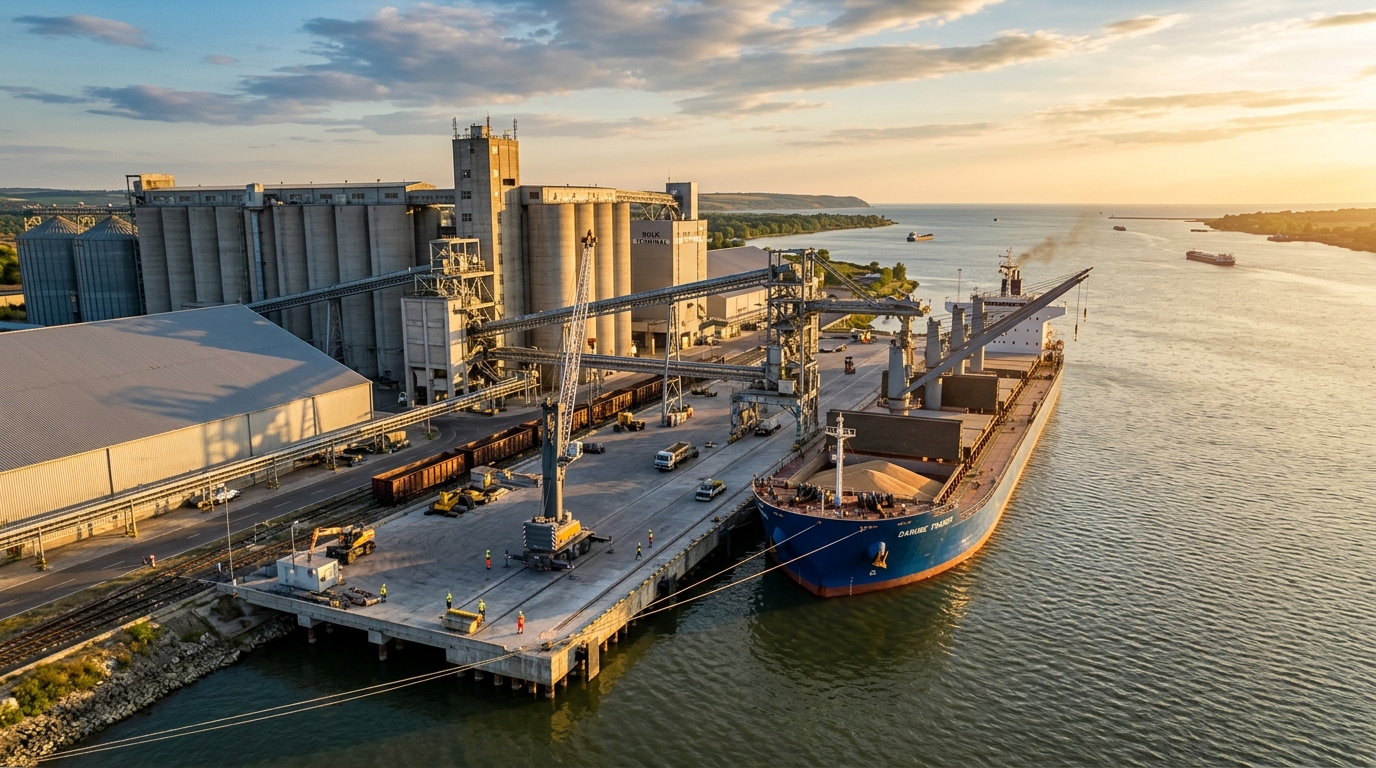
Infrastructure development has focused on a robust platform, a modern docking quay, and essential access roads to support high-volume throughput. The strategic intent is to move beyond smaller river-based operations, allowing for the consolidation of goods from Romania, Moldova, and Ukraine. By enabling the transfer of cereals and other commodities from smaller vessels or barges onto large-capacity maritime ships, the port aims to resolve the inefficiencies currently limiting the economic output of the Danube export route.
The Quest for 11-Meter Depth
The central challenge and the ultimate key to the port’s success lie in the dredging of the Sulina bar to an 11-meter depth. Currently, large maritime vessels are forced to navigate with reduced cargo loads, which significantly hampers transportation efficiency and cost-competitiveness. Should the ongoing dredging efforts prove successful, the port will be able to accommodate significantly larger ships, effectively changing the cost-benefit analysis for shippers who previously had to bypass the region due to draft restrictions.
Post-War Reconstruction Logistics
Beyond current grain exports, the administration at the Sulina Free Zone is positioning the terminal as a cornerstone for the eventual reconstruction of Ukraine. Officials anticipate that the site will serve as a vital transit point for construction materials and essential goods required for post-war recovery efforts. This long-term vision aligns the port with broader European supply chain stability initiatives, ensuring that Sulina remains relevant well after the immediate crises subside.
Regional Competitive Advantage
While the region features other notable facilities like the port of Giurgiulești in Moldova, the Sulina Free Zone maintains a unique competitive edge due to its direct maritime interface. The integration of this terminal with existing logistics corridors creates a complementary network rather than a traditional competitive landscape. By functioning as a specialized transfer node, Sulina provides a necessary service that bridges the gap between inland river transit and deep-sea shipping requirements.
Economic Outlook and Projected Growth
Expert projections suggest that the facility could handle up to 15 million tons of goods annually within the next 7 to 10 years, representing a massive shift in local economic activity. With plans to create approximately 300 jobs and foster a full-to-full transportation model—where incoming ships deliver fertilizers and return with agricultural exports—the Sulina project is a sophisticated example of infrastructure-led market growth. As authorities finalize operating procedures and leasing agreements, the maritime industry will be closely monitoring how effectively this hub integrates into the global grain and commodity supply chain.