Key Takeaways
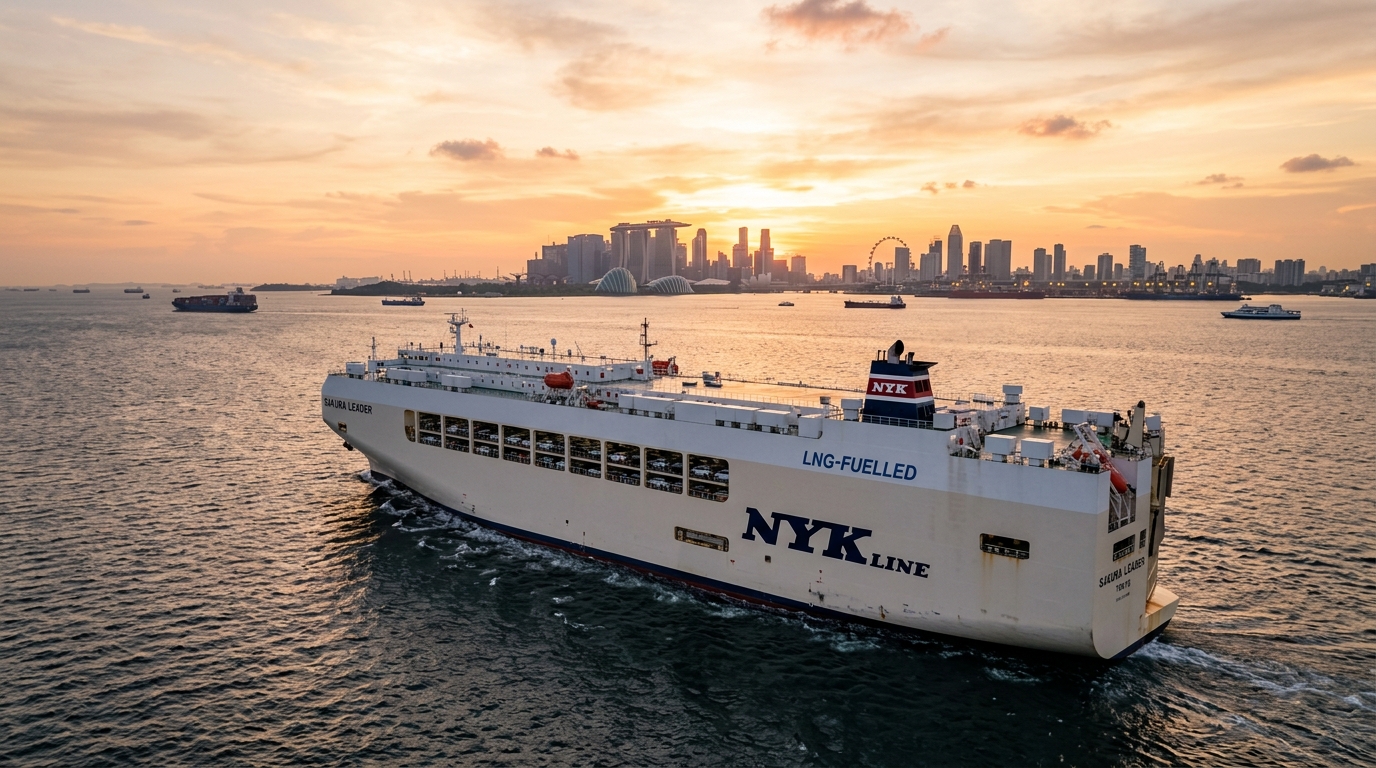
- NYK Line completed a successful autonomous navigation trial using the LNG-fuelled car carrier Elder Leader in Singapore.
- The test demonstrated real-time transmission of voyage data between the vessel and next-generation port traffic management systems.
- This collaboration with the Maritime and Port Authority of Singapore aims to enhance vessel arrival efficiency through just-in-time digital platforms.
Advancing Autonomous Navigation
NYK Line has achieved a critical milestone in maritime digitalization by testing the integration of autonomous navigation systems with the port of Singapore's vessel traffic management infrastructure. The trial, conducted on 29 April 2026, utilized the LNG-fuelled car carrier Elder Leader to demonstrate the viability of shore-to-ship data synchronization. By transmitting voyage planning and operational data directly to prototype traffic management systems, the initiative seeks to replace legacy manual reporting with seamless digital interfaces.
Synergizing Ship and Shore
At the core of this operation was the successful sharing of pilotage route information from onshore support systems directly to the vessel's bridge. While remote pilotage was restricted to navigation through specific channels, the trial provided essential data on how autonomous vessels can interface with port authority platforms. This synchronization is designed to reduce congestion and improve safety, ensuring that both the vessel's crew and port authorities operate from a unified dataset.
Optimizing Port Calls
Efficiency at the quay is a primary driver for the modern maritime sector, and the implementation of the Maritime and Port Authority of Singapore's Just-in-Time platform played a central role in this demonstration. By optimizing arrival times, the industry can significantly reduce fuel consumption and emissions—a critical factor for LNG-fuelled vessels like the Elder Leader. This technology allows for better scheduling, reducing the need for vessels to maintain high speeds only to wait at anchor.
The Role of LNG Technology
The Elder Leader serves as a testbed not only for autonomous systems but also for sustainable propulsion. As the global fleet continues its transition to cleaner fuels, the integration of LNG power with autonomous navigation presents a multi-layered approach to decarbonization. The vessel is equipped with specialized motion-mitigation technology and a comprehensive onboard Wi-Fi network, providing the high-bandwidth connectivity required for these real-time data exchanges.
Digital Foundations for Future Operations
This demonstration stems from a 2024 memorandum of understanding between NYK and the Maritime and Port Authority of Singapore, focusing on three pillars: decarbonization, digitalization, and human resource development. The data collected from this trial will be instrumental in refining the next generation of shore-based support systems. As autonomous technology matures, the ability for ships to 'talk' to ports will become a standard operational requirement, moving the industry away from reactive communication toward predictive logistical management.
Strategic Implications for Global Logistics
The implications of this trial extend far beyond Singapore's waters. As shipping groups like NYK refine their autonomous capabilities, the scalability of these systems will influence port infrastructure design globally. By proving that advanced digital interfaces can operate reliably during live port calls, the industry is setting a new precedent for how high-speed vessels and smart ports will interact in the coming decade. This transition is essential for maintaining global supply chain resilience in an increasingly complex and regulated environment.