Key Takeaways
- The container ship E CO LEVANT successfully bunkered ethanol in Rotterdam for the first time globally.
- The vessel now operates on a blend of 90 percent biomethanol and 10 percent second-generation ethanol.
- This milestone underscores the Port of Rotterdam's commitment to becoming a leading hub for diverse low-carbon maritime fuels.
A Global Milestone in Rotterdam
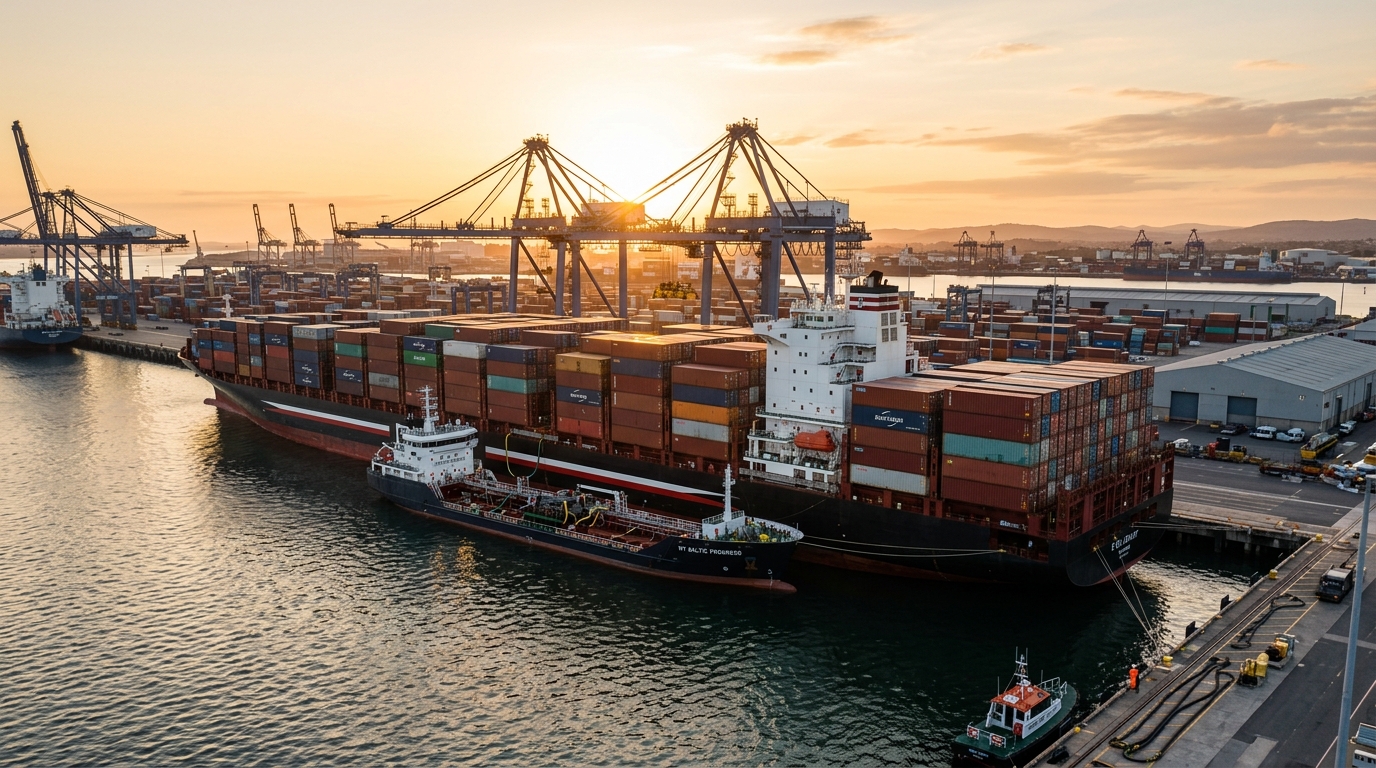
In a landmark development for sustainable maritime operations, the container ship E CO LEVANT, managed by X-Press Feeders, has successfully completed the world’s first ethanol bunkering for a sea-going vessel in the Port of Rotterdam. This operation represents a major technical and logistical achievement, proving that existing bunker infrastructure can adapt to handle a wider array of sustainable fuels beyond the more established methanol supply chains.
The Technical Mechanics of the Blend
During this pioneering operation, the vessel received both methanol and ethanol, which were bunkered separately by a single inland bunker tanker. Once on board, these fuels were precisely blended to create a propulsion mix consisting of 90 percent ISCC EU-certified biomethanol and 10 percent ISCC EU-certified second-generation ethanol. This dual-fuel capability demonstrates the extreme flexibility required by modern feeder vessels as they navigate the transition away from traditional heavy fuel oils.
Expanding the Decarbonization Toolkit
While methanol has gained significant traction as a preferred alternative fuel for the shipping industry, the successful integration of ethanol provides another critical tool for shipowners looking to reduce their greenhouse gas emissions. Specialist consultancy METHANAVE played a key role in the project, highlighting that collaboration across the supply chain is essential to accelerating the adoption of these low-carbon solutions. By leveraging second-generation ethanol, operators can further refine their emissions profiles in alignment with evolving IMO standards.
Port of Rotterdam as a Sustainable Hub
For the Port of Rotterdam, the world’s second-largest bunker port, this event is more than a one-off success; it is a strategic proof-of-concept. With approximately ten million tonnes of fuel bunkered annually, the port is positioning itself as a comprehensive energy hub capable of supporting a multi-fuel future. Having already conducted successful ammonia bunkering pilots in 2025, Rotterdam is clearly moving toward a modular energy strategy that treats ethanol, methanol, and ammonia as complementary solutions rather than competing technologies.
Operational Flexibility in the Feeder Market
X-Press Feeders, as the world’s largest independent feeder shipping company, is setting a standard for fleet performance. Managing a fleet of over 100 vessels requires a pragmatic approach to alternative fuels. By proving that ethanol can be handled safely and efficiently, the company is demonstrating that the industry does not need to wait for a single silver-bullet fuel. Instead, operators are finding workable solutions today that allow for significant carbon reductions while maintaining the rigorous schedules required by global supply chains.
The Road Ahead for Alternative Fuels
The maritime industry continues to face intense pressure to decarbonize, but the path forward remains complex. Projects like this highlight that infrastructure readiness is the primary hurdle. As more ports follow Rotterdam’s lead in preparing for a diverse range of renewable fuels, shipowners will have the confidence to invest in dual-fuel engine types and advanced propulsion systems. This collaboration between energy providers, port authorities, and ship operators serves as a vital blueprint for the next decade of maritime logistics.