Key Takeaways
- A new joint study examines the regulatory and safety frameworks necessary for nuclear-powered commercial ships to conduct port calls in Europe.
- The research emphasizes that current IMO regulations for nuclear vessels require significant modernization to accommodate modern commercial shipping standards.
- While focusing on decarbonization, the project highlights that nuclear power offers a high-density, zero-emission solution for long-range and high-utilization maritime operations.
The Shift Toward Nuclear Feasibility
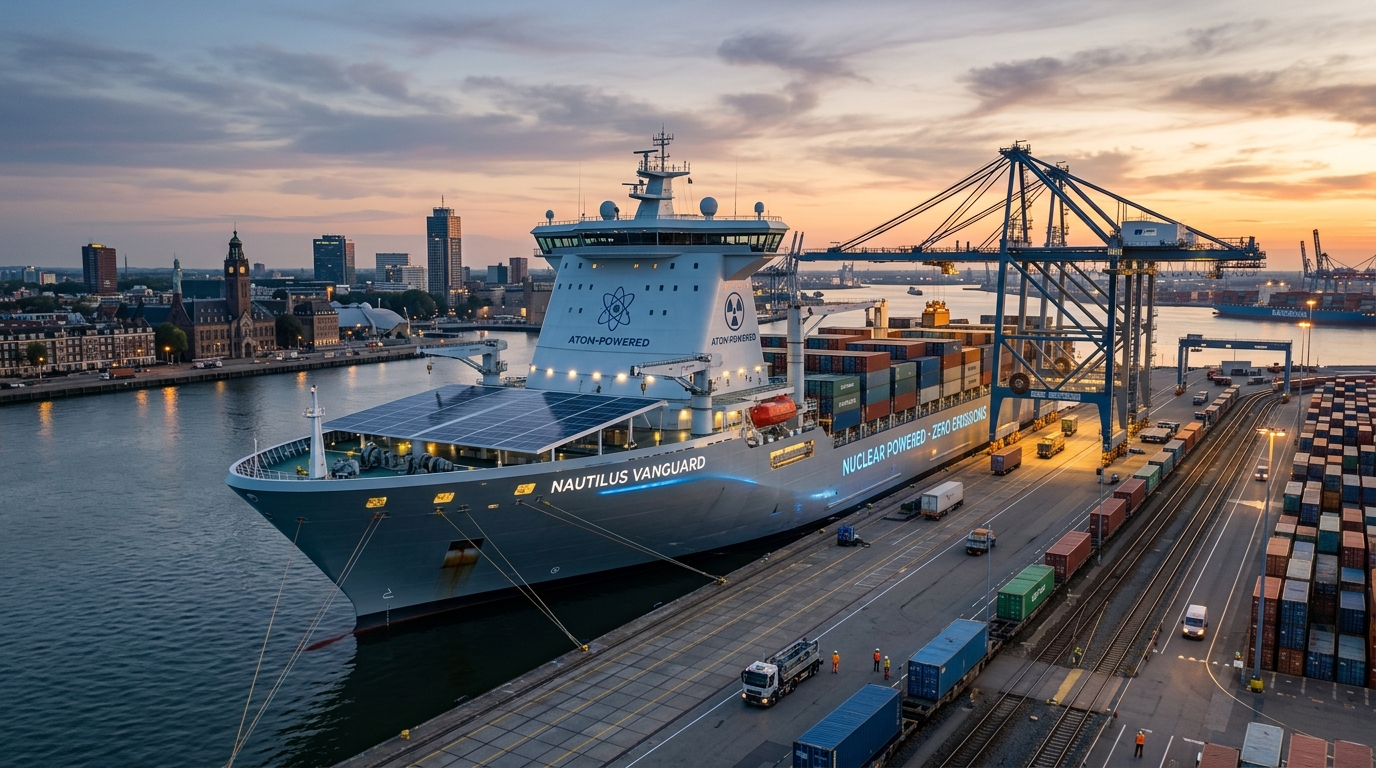
The maritime industry is witnessing a critical shift in decarbonization strategies, moving beyond traditional alternative fuels like ammonia and e-fuels to evaluate the role of nuclear propulsion. A significant new study, titled Enabling Nuclear-Powered Feeder Ships, has been released by a coalition including Lloyd's Register, the Port of Rotterdam, Core Power, and A.P. Moller-Maersk. This research uses the Port of Rotterdam as a case study to map the complex intersection of nuclear technology and commercial port infrastructure.
Regulatory and Safety Frameworks
One of the primary findings of the study is that the existing International Maritime Organization (IMO) provisions for nuclear-powered vessels are outdated, having been developed for a different era of maritime technology. To facilitate the adoption of civil commercial nuclear propulsion, these regulations require comprehensive modernization. The report provides a structured approach for regulators, port authorities, and industry stakeholders to begin the necessary discussions on safety codes and international standards.
Addressing Port Integration
Integrating nuclear vessels into a major port environment involves more than just propulsion technology. The study identifies several critical areas that require further development, including emergency preparedness, physical security, liability management, and public engagement. By using the Port of Rotterdam as a benchmark, the stakeholders have created a credible starting point for how port cities might eventually assess and accept nuclear-powered merchant ships.
A Strategic Solution for Decarbonization
As the industry faces immense pressure to meet net-zero 2050 goals, there is growing skepticism regarding the ability of current alternative fuel solutions to provide the endurance and reliability needed for all shipping segments. Nuclear propulsion is being evaluated as a high-density, zero-emission alternative that could support long-range shipping without the same operational constraints often associated with lower-energy-density fuels.
Industry Stakeholder Perspectives
Key industry leaders have emphasized that this study is not an endorsement of immediate deployment, but rather a necessary step in objective evaluation. Maersk and other project participants have stressed that they continue to monitor this technology alongside other low-emission solutions, recognizing that the transition to sustainable shipping will require a diversified energy portfolio. The study serves to inform the IMO as it revises its safety codes and to assist the IAEA in its ongoing ATLAS program.
Long-term Industrial Competitiveness
The report argues that maritime nuclear propulsion must be considered within the broader context of energy resilience and industrial competitiveness. By preparing the regulatory ground now, the maritime sector aims to avoid the pitfalls of fragmented technological adoption. This proactive stance ensures that if nuclear technology matures for commercial use, the infrastructure and legislative frameworks will be ready to support its integration into the global fleet.