Key Takeaways
- Belfast Harbour has launched a 25-year investment plan worth $1.75 billion to modernize port infrastructure and expand capacity.
- The strategy includes the first land reclamation project in 25 years to build a new container terminal and deepwater quay facilities.
- Projections suggest trade volumes could double to 50 million tonnes by 2050 if the port successfully integrates logistics and clean energy hubs.
The Strategic Vision for Belfast Harbour
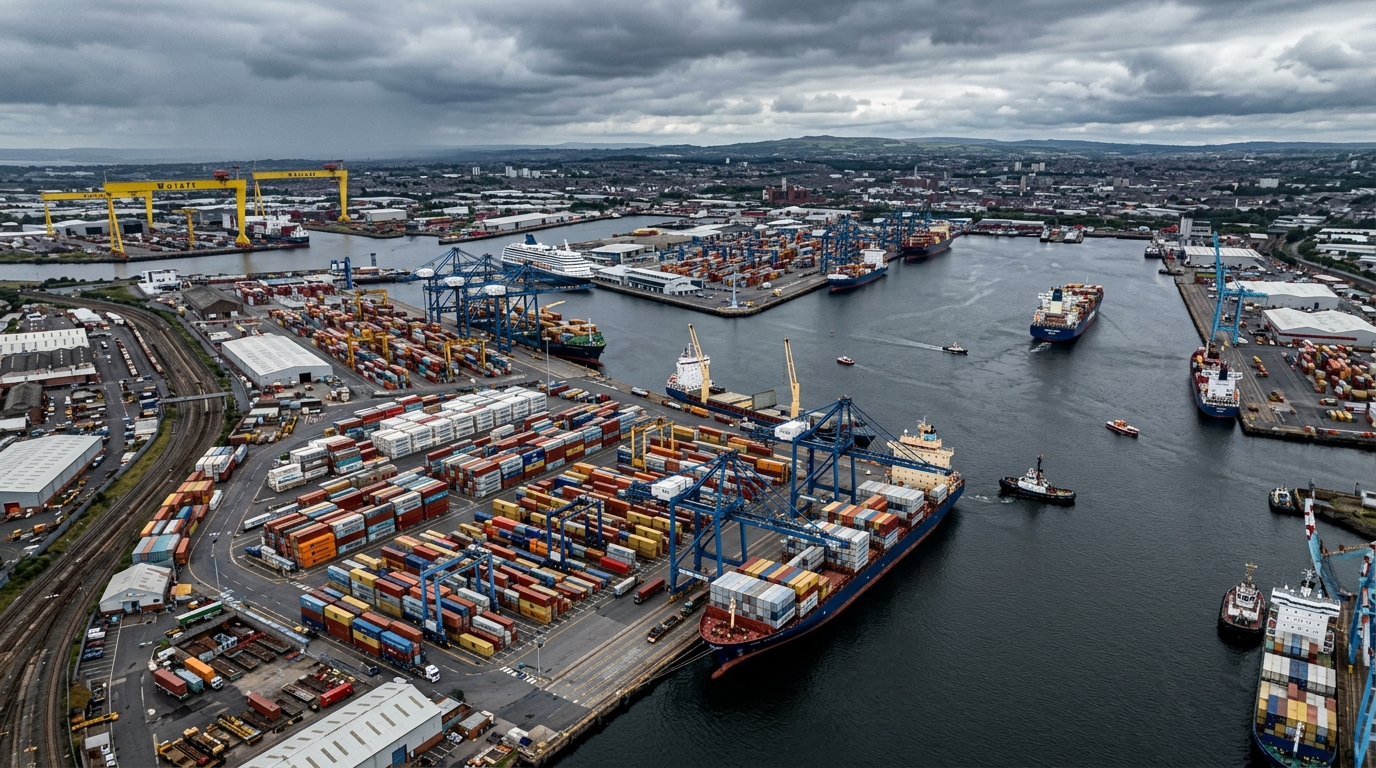
Belfast Harbour has officially unveiled its Horizons of Opportunity masterplan, a comprehensive 25-year roadmap designed to secure its position as the leading maritime gateway for Northern Ireland and the wider island. With a planned investment of $1.75 billion, the port aims to address the looming capacity constraints projected for ports along the Irish Sea’s east coast. By leveraging its vast estate, which includes 2,000 acres of land and 1,000 acres of water, the port is positioning itself to handle a significant surge in trade volumes.
Infrastructure Modernization and Capacity Expansion
The plan is fundamentally rooted in the necessity of physical expansion to accommodate modern, larger vessel classes. A centerpiece of this development is the first major land reclamation project in a quarter-century, which will facilitate the construction of a new container terminal. Furthermore, the redevelopment of Stormont Wharf, the island’s longest deep-water quay, signals an intent to capture larger-scale shipping traffic, ensuring that Belfast remains competitive against regional rivals in Dublin and beyond.
Integrating Energy and Logistics
Beyond traditional freight handling, the masterplan emphasizes the transition toward sustainable maritime operations. The proposal includes the construction of a new clean energy hub and the introduction of shore power capabilities for docked vessels. These green initiatives align with global decarbonization trends, aiming to transform the harbour into a multi-purpose maritime cluster that supports not only logistics but also the renewable energy sector, vital for Northern Ireland’s long-term economic resilience.
Economic Corridor Synergy
Belfast Harbour’s strategy is explicitly designed to reinforce its role as the anchor of the Dublin-Belfast Economic Corridor. By upgrading the container terminal and investing in a new maritime skills academy, the port is attempting to create an integrated ecosystem that links port operations, logistics, and real estate regeneration. This holistic approach is intended to ensure that the port serves as a primary link with Great Britain, mitigating the supply chain volatility that has affected the region in recent years.
Addressing Future Trade Volatility
Expert forecasts provided by Haskoning underscore the urgency of these investments. While steady growth could see trade volumes rise from 24 million to 30 million tonnes by 2050, high-growth scenarios suggest that demand could reach as high as 50 million tonnes. Without the proposed infrastructure projects, port officials warn that growth will inevitably outpace existing facilities, leading to bottlenecks that could stifle regional trade and economic output.
Building on a Rich Maritime Legacy
The development plan effectively utilizes the historic footprint of the former Harland & Wolff Shipyard, which remains a key component of the Harbour Estate under its current operator, Navantia UK. By repurposing legacy industrial space for modern containerization and logistics, the port is bridging its storied history of shipbuilding with the future requirements of international maritime trade, effectively balancing heritage with necessary industrial evolution.