Key Takeaways
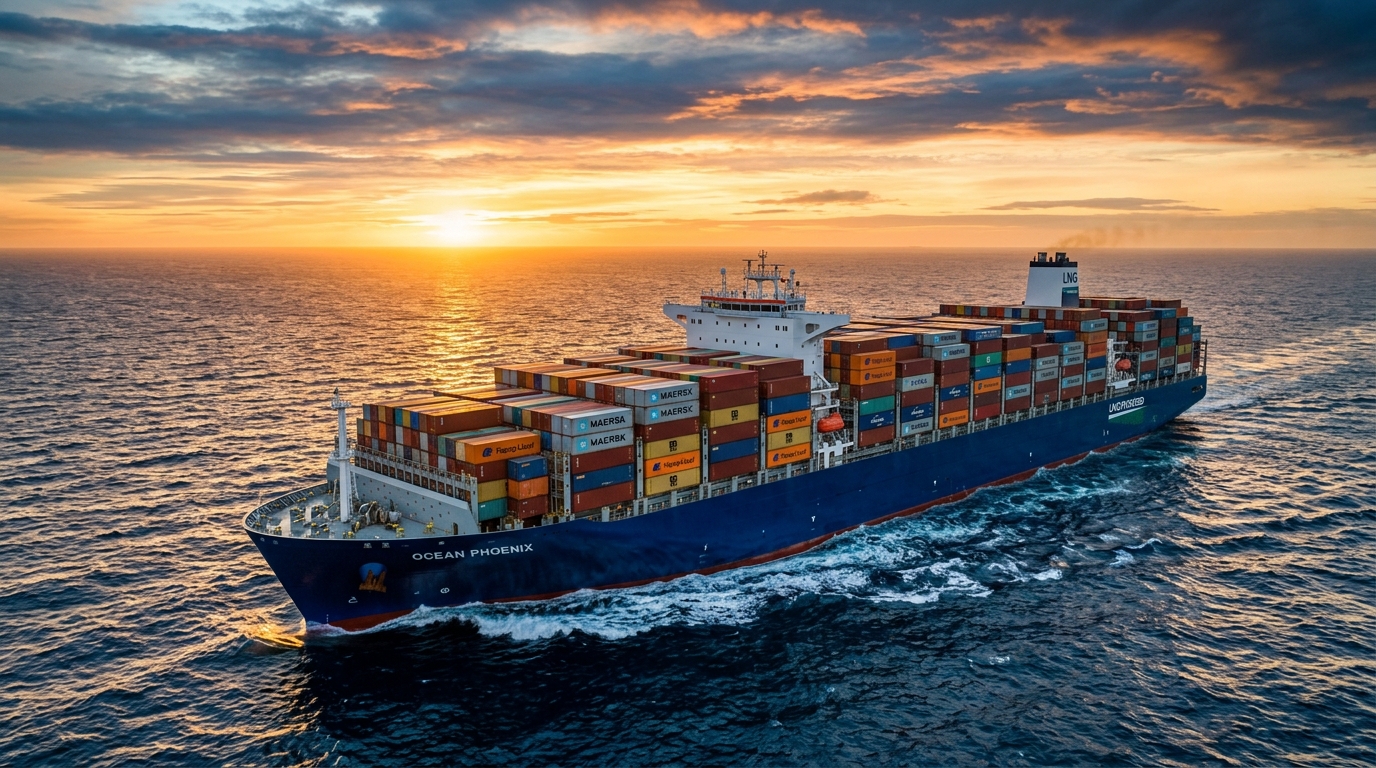
- Ocean Network Express placed a $1.22 billion order for six LNG dual-fuel containerships with HD Hyundai Heavy Industries.
- The new vessels will have a capacity of 15,900 TEU with deliveries scheduled between 2028 and 2029.
- This order contributes to a broader industry trend where 94 percent of vehicle carrier orders and a significant portion of container ship orders are now dual-fuel capable.
Strategic Fleet Renewal
Ocean Network Express (ONE) has solidified its position in the maritime energy transition with a substantial $1.22 billion contract awarded to South Korea’s HD Hyundai Heavy Industries. By securing six 15,900 TEU LNG dual-fuel containerships, the Singapore-headquartered carrier continues its methodical pivot toward alternative-fuel tonnage. This move comes at a critical juncture for the company, as it prepares for a leadership transition under incoming CEO Till Ole Barrelet, while simultaneously navigating a volatile global container market that demands both operational flexibility and long-term sustainability.
The Dual-Fuel Mandate
The order underscores the rapid acceleration of dual-fuel adoption across the global fleet. According to recent data from the World Shipping Council, the global tally of dual-fuel container ships and vehicle carriers has reached 1,204 vessels delivered or on order. This represents an investment exceeding $180 billion. By investing in LNG-capable ships, ONE is hedging against future regulatory uncertainty while maintaining the ability to utilize existing infrastructure as the industry matures toward carbon-neutral fuels.
Technological Integration
These newbuilds are expected to incorporate advanced engine management systems designed to optimize fuel consumption and minimize methane slip, a common concern with LNG-powered propulsion. As ONE balances its order book between methanol-ready tonnage—previously ordered at Chinese yards—and these LNG-fueled units from South Korea, the carrier is effectively diversifying its compliance pathways. This multi-fuel strategy is increasingly common among top-tier operators aiming to meet IMO decarbonization targets by 2050.
Market Context and Pricing
At a price point of approximately $203.5 million per vessel, the order reflects current high-level capital expenditures for modern, green-spec tonnage. Despite earlier reports suggesting more aggressive expansion plans, this latest move suggests a disciplined approach to capacity growth. By focusing on 15,900 TEU vessels, ONE is optimizing its fleet for primary East-West trade lanes where scale and fuel efficiency are paramount to maintaining competitive slot costs.
Geopolitical and Supply Chain Stability
Beyond technical specifications, the strengthening partnership between ONE and HD Hyundai Heavy Industries provides critical supply chain stability. As shipyards worldwide face record backlogs, securing dedicated berth space for the 2028-2029 delivery window is a strategic victory. This ensures that ONE can phase out older, less efficient tonnage, thereby reducing its overall carbon intensity while reinforcing its status as the world’s sixth-largest container carrier.
Looking Ahead
As the maritime industry continues to grapple with the complexities of the energy transition, ONE’s move highlights the necessity of long-term planning. The integration of dual-fuel technology into the core of their fleet ensures that these vessels will remain compliant and relevant for decades. With the industry watching closely, this $1.2 billion investment stands as a testament to the fact that, even amid leadership changes and macroeconomic uncertainty, the drive toward net-zero shipping remains the primary investment engine of the global maritime economy.