Key Takeaways
- Sarens utilized load-bearing mitigation and specialized crawler cranes to transform a bulk coal terminal into an offshore wind logistics hub.
- The operation successfully managed the handling and load-out of 100-metre turbine blades without requiring new permanent pier construction.
- This project proves that existing maritime infrastructure can be rapidly adapted to support the global green energy supply chain through strategic engineering.
Rethinking Legacy Port Utility
The maritime industry is currently under immense pressure to accelerate the build-out of offshore wind capacity, yet the development of purpose-built, greenfield port infrastructure often lags behind market requirements. The recent project completed by heavy-lift specialist Sarens at the Atlantic Canada Bulk Terminal (ACBT) in Sydney, Nova Scotia, provides a compelling, cost-effective alternative to new builds. By adapting a facility originally designed for rugged coal and bulk commodities, Sarens has demonstrated that brownfield sites can be effectively re-engineered to meet the exacting standards of modern offshore energy.
Engineering Solutions for Heavy Loads
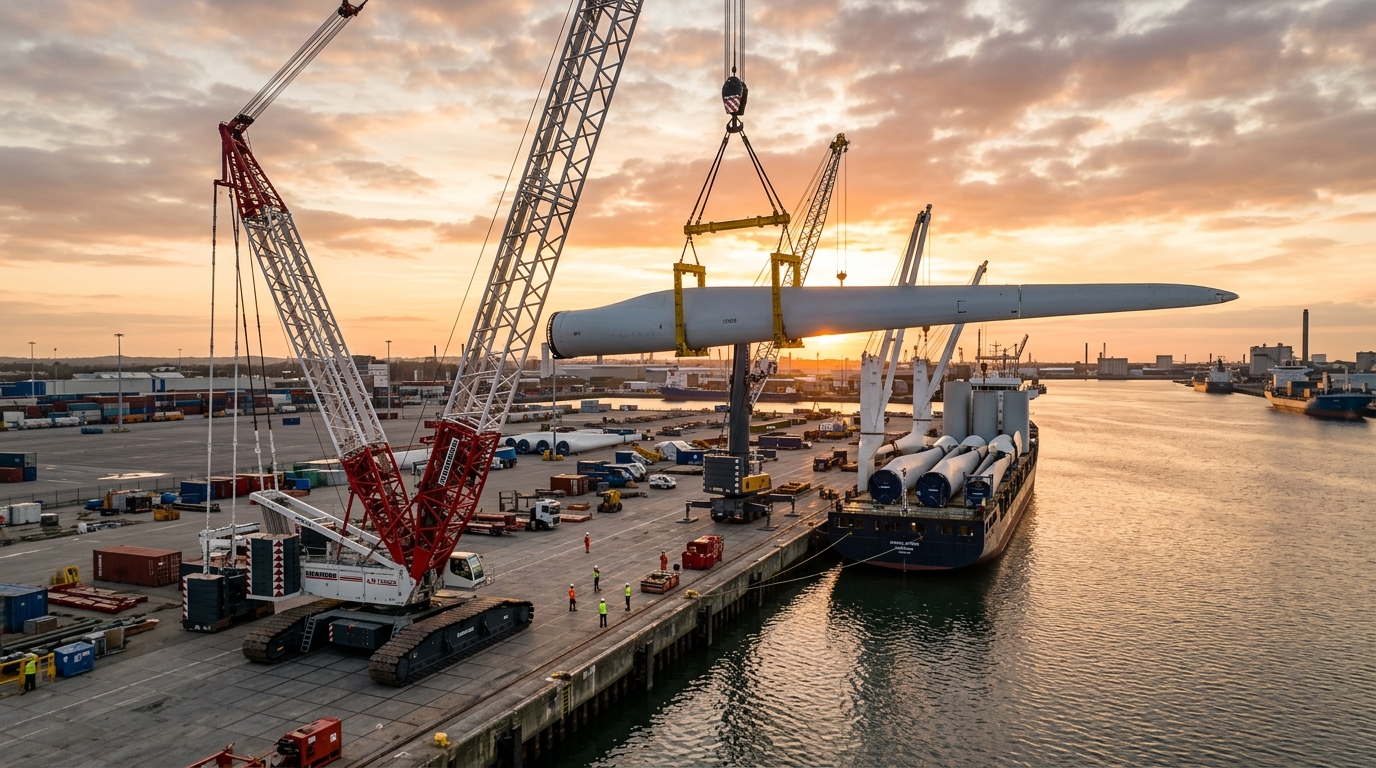
The primary technical hurdle for many legacy ports is ground bearing capacity, which is rarely designed to support the immense, concentrated loads of modern crawler cranes required to move next-generation, 100-metre turbine blades. Sarens addressed this through sophisticated engineering, deploying a 660-tonne capacity crawler crane equipped with a Superlift tray. This configuration allowed for the precise distribution of weight across the pier, ensuring structural integrity while maintaining high operational efficiency during the critical load-out process.
Synchronized Logistics and Vessel Turnaround
Beyond ground preparation, the project showcased the importance of synchronized operations in a high-cost environment. Offshore installation vessels represent significant daily capital expenditure, making port turnaround speed a critical metric for profitability. Sarens utilized tandem lifting operations, coordinating land-based assets with vessel-mounted lifting systems. This integration, executed within narrow time windows, reduced idle time and ensured that the transition of delicate components from quayside to installation vessel was both safe and efficient.
Economic Impact and Regional Integration
The impact of this project extended well beyond technical innovation, providing a tangible economic boost to the Cape Breton region. By mobilizing specialized teams and utilizing local port labor, the project integrated Sydney into the global green energy supply chain. The presence of 150-person crews from installation vessels during the 10-month tenure generated consistent activity for local hospitality and service sectors, illustrating how green energy projects can revitalize traditional port-adjacent communities.
A Blueprint for Future Developments
The success of the Sarens initiative offers a proven blueprint for port authorities and energy developers worldwide. As the offshore wind sector moves toward even larger turbines, the ability to leverage existing infrastructure will be a key competitive advantage. Rather than viewing legacy terminals as obsolete, the maritime industry can adopt this early-engineering approach to transform dormant assets into high-performance strategic hubs for the global energy transition.
Market Outlook and Scalability
As global demand for renewable energy continues to scale, the bottleneck in specialized port infrastructure will likely remain a challenge for the next decade. The Sarens model highlights that modular solutions, such as portable load-bearing systems and flexible crane configurations, can decouple infrastructure readiness from massive, multi-year capital projects. For stakeholders in the offshore sector, this approach provides a faster path to market and a more sustainable use of existing maritime footprints.